

Nethra Balasubramaniam
•
Clinical psychologist
5 Feb 2026
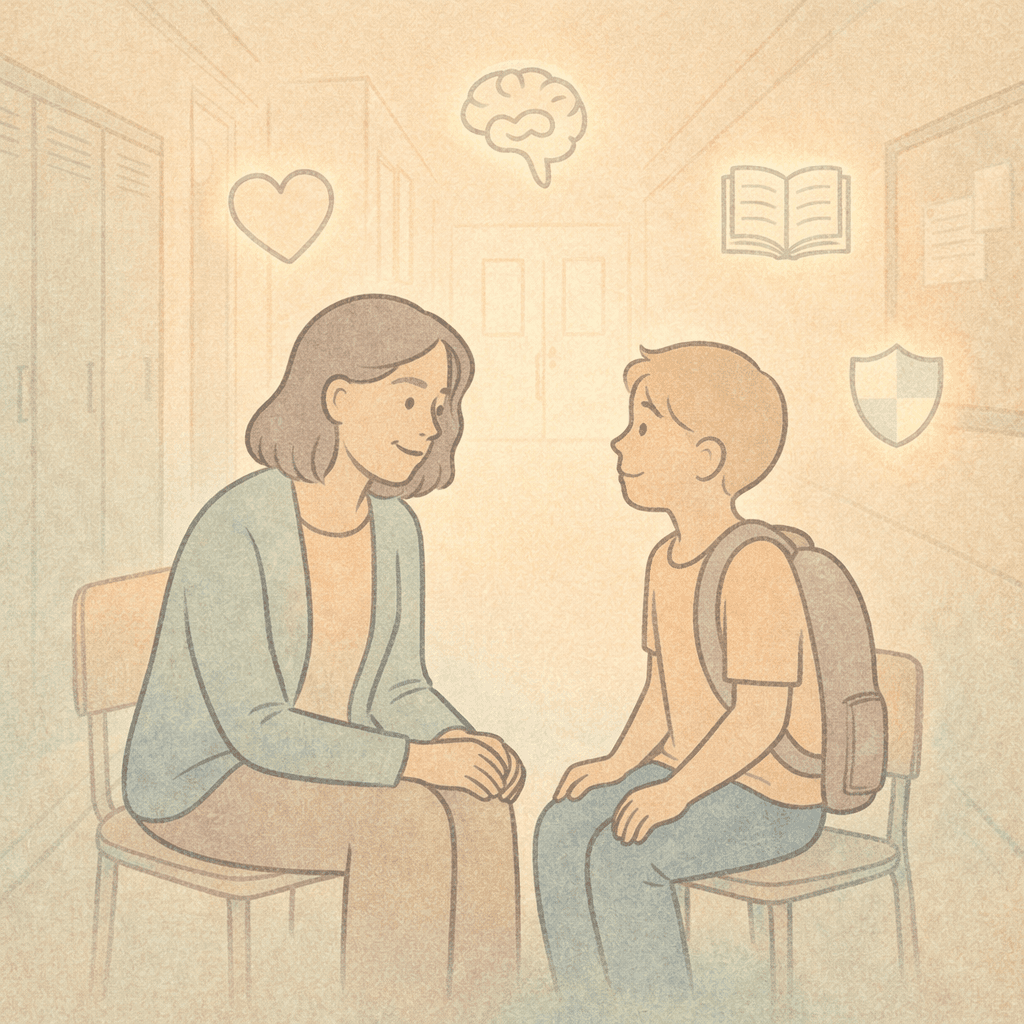
We’re Putting Counsellors in Schools. But Are We Preparing Them to Truly Help?
(Or: 1 Counsellor per 500 Students — A Step Forward, But…)
When we first read the update—1 counsellor per 500 students in CBSE schools— it made us feel hopeful.
Finally,
For years, parents, teachers, and mental health professionals have been saying the same thing in different ways: our children are struggling, and schools cannot do this alone. So yes, this move matters. It’s visible. It’s official. It sends an important message to our children: your emotional well-being is important enough to be planned for.
This move brought us relief.
But as an organization that works closely with children and adolescents, we also felt… cautious.
Because presence alone is not the same as preparedness.
Children Aren’t Small Adults (And This Matters More Than We Think)
One of the biggest misunderstandings about mental health work is the assumption that if you can work with adults, you can automatically work with children.
You can’t. At least, not without specialised training.
Children don’t sit across from you and explain their anxiety clearly. Teenagers don’t always want to talk at all. Emotional distress in children often comes out as behaviour like irritability, withdrawal, aggression, falling grades, unexplained physical complaints, or sudden changes that adults may dismiss as “phases.”
Even experienced psychologists often say that working with children and adolescents is one of the most complex areas of mental health practice. It requires a good understanding of development, family systems, school environments, and trauma-informed care.
Early support isn’t just about being available.
It’s about knowing what to notice, what questions to ask, when to intervene, and importantly when not to.
And this is where our concerns begin.
Why the Broad Qualifications Make Sense (And Why its still worrisome)
We understand why the eligibility criteria for school counsellors are broad.
India does not currently have enough trained child and adolescent psychologists to meet the demand. If we waited for the “perfect” system, we’d be waiting another decade while children continue to struggle silently.
Making this role accessible to counsellors, psychologists, and mental health professionals from varied backgrounds is a practical and necessary step. It opens doors. It builds awareness. It normalises mental health support in schools.
All of that is good.
But accessibility without adequate competence can be risky, especially when we are dealing with developing minds.
A well-intentioned but under-prepared counsellor may:
Miss early warning signs of serious concerns
Overpathologise normal developmental behaviour
Handle disclosures of abuse or self-harm incorrectly
Give advice that unintentionally increases shame or fear
Involve parents or authorities at the wrong time (or too late)
And once trust is broken for a child, it’s very hard to rebuild.
So What Does Real School Mental Health Support Actually Need?
If we want school counselling to truly help children (not just exist on paper) it needs more than numbers. It needs structure, guidance, and continuous support.
This is the gap that MHITR’s Igniting Minds Program was created to address.
Igniting Minds is built on one core belief:
supporting children’s mental health requires specialised, ongoing preparation - not just good intentions.
Here’s what that looks like in practice:
1. Developmentally Informed Training
Igniting Minds focuses on helping counsellors and educators understand how emotional distress looks different at different ages and why applying adult frameworks to children often doesn’t work.
The program emphasises:
Child and adolescent emotional development
Behaviour as communication
Practical, school-based intervention models
This foundation helps professionals respond with clarity instead of confusion.
2. Clear Boundaries and Decision-Making Frameworks
School counsellors often struggle with questions like:
When do I handle this in school?
When do I refer out?
When do parents need to be involved?
Igniting Minds equips professionals with clear frameworks, so decisions are guided by best practices—not guesswork.
3. Learning That Grows With Children
Children’s challenges are changing - exam stress, digital pressure, identity questions, and social media impact are now part of daily school life.
Igniting Minds is designed as an ongoing learning journey, not a one-time training—because children’s needs don’t stay static.
Presence Is the First Step. Preparedness Is the Responsibility.
This policy is a meaningful beginning. It shows intent. It opens doors.
But children don’t just need someone to be there.
They need someone who understands them.
Someone who knows when to listen, when to intervene, and when to seek help.
Someone who can hold their emotions without fear or judgment.
That level of care doesn’t happen by chance.
It requires preparation.
It requires support.
It requires programs like MHITR’s Igniting Minds.
Why This Conversation Matters
Igniting Minds isn’t just about training counsellors.
It’s about building safer, more responsive school environments—where emotional well-being is treated with the same seriousness as academics.
When schools get mental health support right, the impact lasts far beyond classrooms.
And our children?
They deserve nothing less.