Picture this; you are living with your elderly relative. Everything is going well, the physician’s test results look promising, days go by peacefully. Then all of a sudden things start changing and you can’t tell why. Before you know it, they can’t even remember your name. It goes without saying that watching your loved one slowly lose their mental capacity can be heartbreaking.
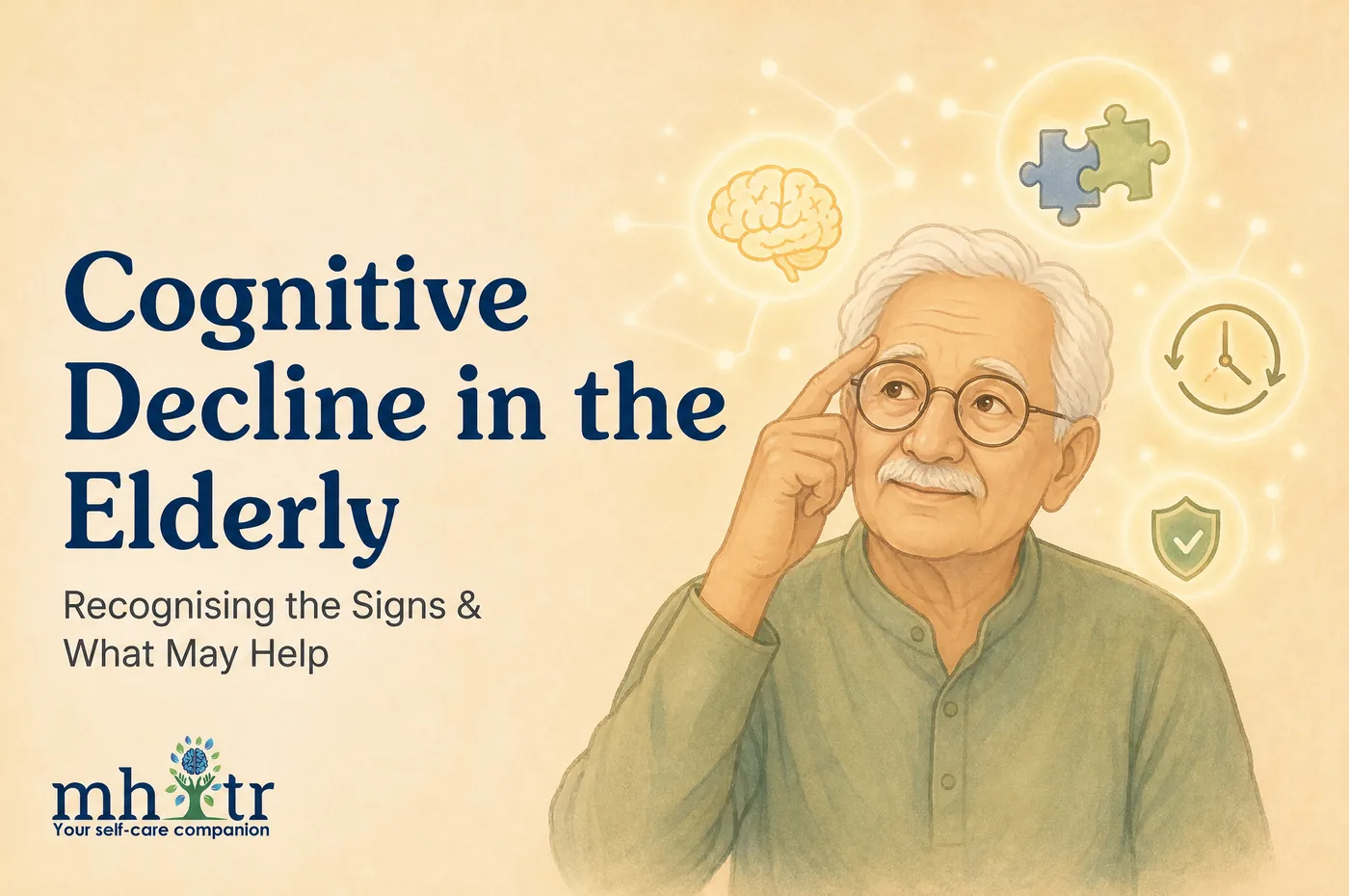
Cognitive decline in the elderly is a broad term, and it covers a wide range of experience. Some of it is entirely normal, such as taking a moment longer to recall a name, misplacing keys occasionally or even needing a second read of something dense. Some of it is more significant, and deserves attention. The two are often confused, and that confusion causes real harm in both directions: families who dismiss genuine warning signs as “just old age,” and families who treat every slow morning as the beginning of dementia.
Let’s try and unpack what actually drives decline, and what can realistically be done about it.
What does cognitive decline mean?
Cognitive decline means a gradual loss of thinking abilities such as memory, attention, language, reasoning and judgement. In plain English, the mind is not working as sharply as it used to for that person. It ranges from the mild slowing that comes with normal ageing to changes serious enough to affect daily life.
Cognitive decline, in the textbook sense, refers to a reduction in mental functions such as memory, attention, language, reasoning or problem-solving, beyond what would be expected from normal ageing alone. It exists on a spectrum. At the milder end is what’s sometimes called mild cognitive impairment, which is commonly noticeable to the person and those close to them, but not yet disruptive to daily independence. At the more advanced end sits dementia, where the decline is significant enough to interfere with everyday functioning.
Not everyone who experiences mild cognitive impairment goes on to develop dementia. The relationship between the two is real, but it is not a guarantee, and it is not linear. That distinction matters, because it changes how a family should respond to this. Preferably with attention and support, not panic.
What are the early signs of cognitive decline in elderly people?
Because normal ageing and genuine decline can look similar on the surface, it helps to know what to actually watch for. No single sign confirms anything on its own, and that is why we look for a pattern, a persistence, and a change from someone’s usual baseline.
Repeating the same question or story within a short period
Difficulty following a conversation, recipe, or set of instructions they’d normally manage easily
Getting disoriented in familiar places
Misplacing items in unusual locations, or losing track of dates and routines
Withdrawing from conversations, hobbies or social plans they used to enjoy
Increasing difficulty managing finances or medications they previously handled independently
Noticeable changes in judgement or decision-making
A single instance of any of these is rarely significant on its own, because everyone has that one off day. It doesn’t mean a diagnosis is due. A pattern that persists, worsens, or clearly departs from how that person has always been is what demands a conversation with a doctor, the sooner the better.
What causes cognitive decline in older adults?
There is rarely a single cause. The most common contributors are:
- Ageing itself. Some slowing in recall and processing speed is expected with age.
- Brain diseases. Alzheimer’s disease and other forms of dementia damage brain cells over time.
- Reduced blood flow to the brain. Stroke, high blood pressure, diabetes, high cholesterol and smoking all affect the blood vessels the brain depends on.
- Untreated hearing or vision loss. When less information reaches the brain, it has less to work with.
- Depression, loneliness and social isolation.
- Physical inactivity and poor sleep.
- Treatable medical causes. Low vitamin B12, thyroid problems, infections and the side effects of some medicines can all affect memory and thinking, which is one reason a medical check matters.
Several of these can be changed. The 2024 Lancet Commission on dementia identified 14 modifiable risk factors across the life course, including hearing loss, high blood pressure, physical inactivity, depression and social isolation, and estimated that addressing them could in theory prevent or delay close to half of dementia cases.
Two further contributors are discussed less often.
When the workload disappears
One of the less obvious contributors to cognitive decline has nothing to do with disease and everything to do with routine.
Consider a mother who spent decades managing a household. Think of budgets, schedules, decisions made dozens of times a day, often for several people at once. That kind of constant, low-level executive function is real cognitive work, handled largely by the brain’s frontal lobe. When that workload disappears, for example children have grown, responsibilities handed off, the household is simplified and the mental exercise that came with it disappears too.
This isn’t a dramatic or sudden change. It’s gradual, and it’s easy to miss, because it looks like rest rather than decline. But a frontal lobe that is no longer being regularly exercised through planning, decision-making and problem-solving can genuinely slow down over time. The loss of workload is not the same as the loss of ability, but without deliberate replacement, one can quietly lead toward the other.
Screens, attention and an open question
In the modern era we must include one other factor, though less talked about, because the evidence for it is still developing: the effect of heavy screen use on attention and cognitive function, across age groups.
Some observers have raised concerns that constant engagement with short-form digital content; the endless scroll, the six-inch screen replacing longer stretches of sustained attention, may be contributing to shorter attention spans and reduced deep-thinking capacity, particularly in younger generations. This is not yet a settled, clinically established finding, and should be taken as such. But it is an area of active research, and it’s reasonable to think that a life increasingly organised around brief, high-stimulation content could affect sustained attention and reflection over time, in older adults as much as younger ones.
The practical position here is: watch this space. It would be premature to call screen use a direct cause of cognitive decline. It would also be a mistake to assume it has no effect at all.
Is cognitive decline a normal part of ageing?
Partly. Some change is normal: slower recall, taking longer to learn something new, occasionally losing a word. These changes are frustrating, but they do not stop a person from managing their own life. Significant decline is different. The World Health Organization is clear that dementia, although more common after 65, is not an inevitable part of ageing.
| Usually normal ageing | Worth a medical check |
|---|---|
| Forgetting a name and recalling it later | Forgetting recent events or the names of close family |
| Misplacing keys now and then | Putting things in unusual places and being unable to retrace steps |
| Needing more time to learn a new phone | Struggling with familiar tasks such as a usual recipe or paying bills |
| Occasionally searching for a word | Frequent difficulty following or joining a conversation |
| Forgetting the date but working it out | Getting lost in familiar places |
Cognitive decline vs dementia
The two terms are often used as if they mean the same thing. They do not. Cognitive decline is the broad description of thinking abilities getting weaker. Dementia is one specific, more severe stage of it, diagnosed when the decline is significant enough to interfere with everyday independence. Mild cognitive impairment sits between the two.
| Normal ageing | Mild cognitive impairment | Dementia | |
|---|---|---|---|
| What changes | Slower recall and learning | Memory or thinking problems noticeable to the person and those close to them | Marked decline in memory, reasoning, language or judgement |
| Daily independence | Unaffected | Largely preserved | Help is needed with everyday tasks |
| What to do | Stay active and engaged | See a doctor and review regularly; it does not always progress | Medical assessment, a care plan and family support |
Can exercise help cognitive health?
Yes. It is one of the best-supported habits. WHO’s guidelines on reducing the risk of cognitive decline and dementia recommend physical activity for adults with normal cognition. For people aged 65 and over, WHO advises at least 150 minutes of moderate activity a week, plus balance and strength exercises on three or more days to help prevent falls.
Exercise is not a cure and it does not reverse dementia. What it does is support blood flow, sleep, mood, blood pressure and blood sugar, all of which matter to the ageing brain. Walking, gentle yoga and physiotherapy-guided movement all count, and activity that also asks the mind to work is better still, as we explain in why senior fitness needs brain training too.
How families can support older adults
Families cannot change age or genetics, but they shape much of what else matters: daily routine, company, and how quickly a change is noticed.
Can cognitive decline be slowed?
There’s no guaranteed way to prevent memory loss in old age. Genetics, underlying health conditions and age itself all play a role that lifestyle alone cannot fully offset. But several factors are consistently associated with better cognitive outcomes, and they’re worth taking seriously precisely because they’re achievable.
Regular physical activity, which supports blood flow to the brain as much as it supports the rest of the body
Consistent, adequate sleep, which plays a direct role in memory consolidation
A varied, nutrient-rich diet, particularly one that supports cardiovascular health
Ongoing social connection. The link between loneliness and cognitive decline is well established, which is exactly why the two subjects sit side by side in this series
Managing chronic conditions such as high blood pressure, diabetes or hearing loss, all of which are independently linked to higher risk of cognitive decline when left unaddressed
None of these are guarantees, but all of them are reasonable, and all of them are within a family’s ability to support.
For practical detail, see our guides to the best brain foods for seniors and how much sleep seniors need.
Brain stimulation activities for seniors
Alongside physical health, mental engagement matters in its own right. Brain stimulation activities for seniors don’t need to be clinical or straining to be useful; what matters is consistency over intensity.
What is required are small, attainable activities that challenge the mind, such as puzzles, crosswords or card games. And it is always important to learn something new every now and then. Perhaps a new word, or practising a musical instrument.
As mentioned earlier, maybe the key would be to simulate that same level of mental exercise that they are already used to. For this we can try involving them in the more active tasks of everyday life, such as budgeting or planning events. A grandparent could help a grandchild with homework just like they did with their own child back then.
This is also where technology becomes useful rather than a setback. Well-designed cognitive training apps, video calls that require following conversation and responding in real time, and even simple smartphone use; navigating menus, sending messages, all ask the brain to do real work. Used deliberately, technology can be a tool for engagement rather than a notorious source of disconnection (in short yes, buy your grandmother that iPad. Just make sure to use it right).
The central idea across all of this is the same; engagement, not just company, is what supports cognitive health. We must understand that the two conversations, loneliness and cognitive decline, are not separate topics that happen to sit near each other. They’re two views of the same underlying need.
If you are looking for somewhere to start, these daily mental exercises for brain health take a few minutes each and need no special equipment.
A global pattern, not just a local one
Cognitive decline and dementia risk vary across regions, and the reasons are more complicated than culture alone.
In parts of Europe, ageing populations combined with smaller household sizes have made dementia care a significant public health planning issue, with substantial national investment in research and long-term care infrastructure. Whereas in much of Africa, reported rates of diagnosed cognitive decline remain comparatively lower, though this reflects differences in diagnosis, life expectancy and healthcare access as much as it reflects underlying risk.
In East Asia, China and Japan in particular, rapidly ageing populations and shrinking household sizes have made cognitive health a major research and policy focus over the past two decades. India, with one of the fastest-growing elderly populations in the world, is only beginning to build the awareness and infrastructure that this scale of change requires. And in the United States, where independent living is the cultural norm, cognitive decline is tracked as a distinct public health priority, separate from broader ageing policy.
The pattern across all of these regions is the same. And this means no culture is protected by default, and no family structure guarantees an outcome either way. What consistently helps is engagement, health management and early attention to changes, not the size of the household someone lives in.
When to speak with a healthcare professional
Family support matters, but it isn’t a substitute for medical evaluation. A persistent or worsening pattern of the signs listed earlier deserves a proper assessment, and a wait-and-see approach might not be enough.
Speak with a doctor when:
- memory or thinking changes last for several weeks or are getting worse
- everyday tasks such as managing money, medicines or cooking are becoming difficult
- safety is affected, for example getting lost or leaving the stove on
- there are marked changes in mood, personality or behaviour
Sudden confusion that develops over hours or days is different. It can be caused by an infection, a stroke or a medicine and needs urgent medical attention.
In India, structured memory care programmes for seniors are still relatively limited compared to the scale of need, but they do exist and are growing; combining cognitive assessment, structured stimulation activities and family guidance in one place. A senior wellness program such as MHITR®’s Vayofit, for instance, builds cognitive engagement into a broader home-based wellness routine alongside physical activity, rather than treating memory support as a separate, clinical add-on.
Wellness programmes work alongside medical care. They do not diagnose or treat dementia.
Getting an assessment early isn’t an overreaction. It’s the same principle as any other area of health: earlier attention generally means more options.
Closing the loop
Loneliness and cognitive decline are frequently discussed as though they’re unrelated; one an emotional issue, the other a medical one. But are they unrelated? A disappearing workload, a shrinking social world, and a mind with fewer reasons to actively engage all point toward the same outcome, approached from different directions.
The response, in both cases, turns out to be similar: stay involved, stay engaged, and pay attention to change rather than explaining it away as simply “getting older.” Growing older changes a great deal. It doesn’t have to mean the mind quietly steps back from the rest of life.
Frequently asked questions
What does cognitive decline mean?
Cognitive decline means a gradual weakening of thinking abilities such as memory, attention, language, reasoning and judgement. It ranges from the mild slowing of normal ageing to changes that interfere with daily life.
What are the first signs of cognitive decline?
Repeating the same questions or stories, losing track of dates, misplacing things in unusual places, difficulty following conversations or instructions, trouble managing money or medicines, and withdrawing from hobbies or social plans.
Is cognitive decline normal with age?
Some slowing of memory and thinking is a normal part of ageing. Decline that keeps getting worse or affects everyday independence is not, and dementia is not an inevitable part of growing older.
What causes cognitive decline in older adults?
Common causes include ageing itself, Alzheimer's disease and other dementias, stroke and blood-vessel disease, untreated hearing loss, depression, isolation, inactivity and poor sleep. Low vitamin B12, thyroid problems and some medicines are treatable causes.
Can cognitive decline be slowed?
There is no guaranteed way, but regular physical activity, good sleep, a balanced diet, social connection, mental stimulation and good control of blood pressure, diabetes and hearing loss are all linked with better cognitive outcomes.
When should someone see a doctor about memory problems?
When changes persist for several weeks, get worse, or affect daily tasks and safety. Sudden confusion over hours or days needs urgent medical attention.
References
- Penninkilampi, R., Casey, A. N., Singh, M. F., & Brodaty, H. (2018). The association between social engagement, loneliness, and risk of dementia: A systematic review and meta-analysis. Journal of Alzheimer’s Disease, 66(4), 1619–1633. PubMed record
- Fan, K., Seah, B., Lu, Z., Wang, T., & Zhou, Y. (2024). Association between loneliness and mild cognitive impairment in older adults: A meta-analysis of longitudinal studies. Aging & Mental Health. PubMed record
- Hou, T., Ho, M.-H., & Lin, C.-C. (2026). Understanding the impact of social isolation and loneliness on cognitive function in older adults: Longitudinal evidence of trajectories and influencing factors — a systematic review. Aging & Mental Health. PubMed record
- Wei, C.-C., Hsieh, M.-J., & Chuang, Y.-F. (2024). The effects of social interaction intervention on cognitive functions among older adults without dementia: A systematic review and meta-analysis. Innovation in Aging, 8(10), igae084. PubMed record
- Livingston, G., Huntley, J., Liu, K. Y., et al. (2024). Dementia prevention, intervention, and care: 2024 report of the Lancet standing Commission. The Lancet, 404(10452), 572–628. PubMed record
- World Health Organization. (2019). Risk reduction of cognitive decline and dementia: WHO guidelines. WHO guidelines
- World Health Organization. Dementia. WHO fact sheet
- World Health Organization. Physical activity. WHO fact sheet