Growing older comes with something wonderful: perspective.
After several decades of living, an older person may have learned how to raise a family, manage a household, build a career, navigate difficult seasons and solve problems that once seemed impossible. There is a lifetime of knowledge sitting behind the simplest piece of advice from a grandparent.
But experience does not mean there is nothing left to discover. There is always another recipe to try, another song to learn, another story to hear, another puzzle to solve or another question worth asking.
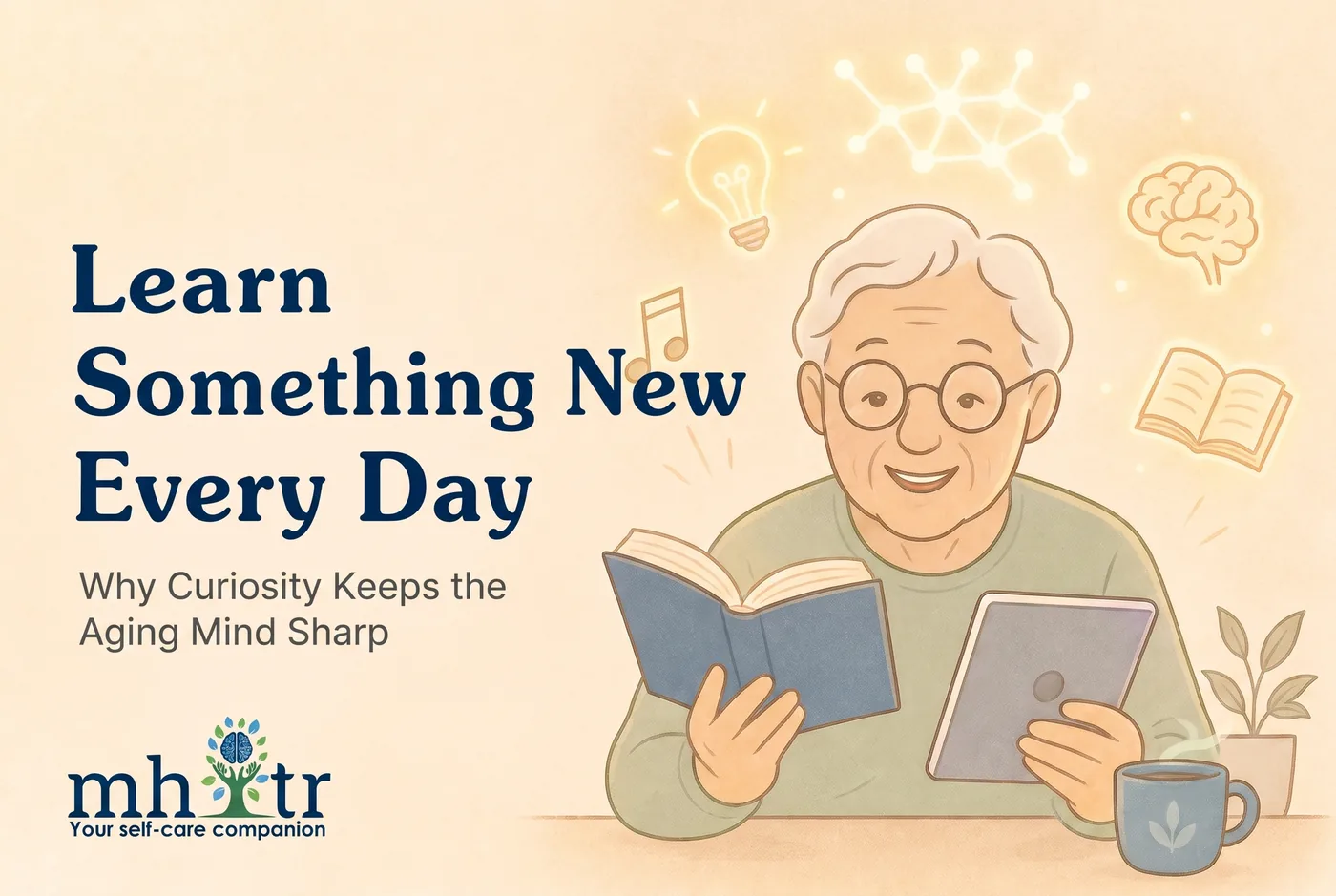
Age brings experience; curiosity keeps us connected to the present. Learning something new every day does not have to mean returning to a classroom. For older adults, it can be as simple as keeping the mind engaged with the world around them. And that matters for healthy ageing, and for curiosity and brain health.
Why should we keep the mind active as we age?
The brain, like the rest of the body, benefits from being used.
Thinking, remembering, concentrating, solving problems and learning new information all give the mind opportunities to stay engaged. This does not mean that learning can prevent every form of cognitive decline, nor should ordinary forgetfulness be treated as a medical problem.
But cognitive stimulation for seniors is one valuable part of a broader approach to brain health. The World Health Organization’s updated guidance on reducing cognitive decline and dementia supports cognitive stimulation and engagement in social activities as part of healthy ageing. It also emphasises that dementia is not an inevitable part of getting older.
This is an important distinction. The goal is not to keep an older person’s brain permanently occupied because it is somehow “wearing out.” Rather it is to give them opportunities to think, explore, interact and enjoy the real lifelong learning benefits.
Learning does not have to look like school
The phrase “learn something new” can sound like homework if we let it. It does not have to.
An older adult can learn something new while making breakfast, walking around the neighbourhood, talking to a grandchild or watching a programme on television.
Perhaps a new recipe uses an unfamiliar ingredient. Perhaps a grandchild introduces them to a new phone application. Perhaps they decide to learn a few words in another language. Perhaps they finally discover why a favourite song was written. Perhaps they pick up a puzzle they have never attempted before.
These moments may not come with certificates, grades or examinations, but they still involve curiosity and mental engagement. That is the beauty of learning new skills in old age. It can fit into life rather than interrupt it.
The joy of being a beginner again
There is something humbling about not knowing how to do something. For many older adults, this can be surprisingly refreshing.
After decades of being the person others turn to for answers, it can be enjoyable to become the learner again. How does this new smartphone feature work? Can I remember these five words? Can I learn this yoga movement?
The objective does not always have to be mastery. Sometimes the pleasure is simply in discovering that there is still something unfamiliar waiting around the corner. And being a beginner does not diminish everything a person already knows; it adds to it.
What counts as brain exercises for elderly people?
It does not have to involve a computer or an expensive piece of equipment.
Mental activities for older adults — memory games, puzzles, storytelling, card games, music, reading, crafts and learning new skills — can all create opportunities to think and interact.
Even everyday activities can become little mental challenges:
Try remembering a shopping list without writing it down.
Rearrange a familiar recipe.
Learn the name of a plant growing nearby.
Tell a family member a story from childhood they have never heard.
Ask a grandchild to teach you something they know, then teach them something in return.
The last one is particularly valuable, because learning does not have to travel in only one direction. Grandparents have knowledge. Grandchildren have knowledge. Both can be teachers.
MHITR®’s approach to healthy ageing recognises this connection between cognitive engagement, movement and social interaction. Its senior wellness resources describe Vayofit for adults aged 55+ as combining physiotherapy, brain games and yoga with a focus on mobility, cognitive engagement and connection.
When the brain and body learn together
Keeping the mind active is not sitting still. In fact, some of the most interesting activities ask the brain and body to work together. Imagine trying to remember a sequence while moving through it, or maintaining coordination while completing a simple task, or following instructions while controlling your breathing.
These activities introduce another layer to learning: attention, coordination and movement become part of the challenge.
MHITR®’s Brain Olympics is one example of this approach. Its activities are designed to combine cognitive stimulation for seniors with gentle physical activity, breathing, social participation and emotional connection.
The activities include games such as Ring Toss & Recall, Agility Memory Walk, Cup Logic Arena, Spoon Dexterity and Straw Breath Precision. Rather than presenting cognitive activity as a worksheet, the programme turns it into something people can actually participate in and enjoy.
This is an important idea for healthy ageing: the mind and body do not need separate schedules.
Physical activity itself can support cognitive function and mental well-being in older adults. WHO recommends that older people remain as physically active as their abilities and health conditions allow, while incorporating activities that support balance and help maintain functional ability.
Making curiosity part of everyday life
The best routine is often the one that does not feel like a routine. A few simple habits can turn ordinary days into opportunities for discovery, and strengthen curiosity and brain health at the same time:
At breakfast: try a different recipe or learn something about an ingredient.
During a walk: notice five things you have never paid attention to before.
With family: ask someone to teach you something they know.
While watching television: look up one unfamiliar word, place or historical reference.
During exercise: introduce a simple memory or coordination challenge that is appropriate for your abilities.
In the evening: think back on the day and ask — what did I discover today?
None of these require a timetable filled with lessons; they simply make room for curiosity.
Learning can keep us connected, too
There is another benefit that is easy to overlook. Learning gives people something to share.
A new recipe can become a family meal. A new game can become an afternoon activity with grandchildren. A new skill can become a conversation. A story remembered from childhood can become a piece of family history.
WHO’s guidance on the mental health of older adults highlights meaningful social activities, education, leisure and social connection as important contributors to well-being and quality of life.
So when we encourage an older person to learn something new, we are not necessarily asking them to sit alone with a book or puzzle. We can invite them to learn with someone. That small change can make learning more enjoyable and more meaningful.
You do not have to learn everything
There is no need to turn lifelong learning into another obligation. Nobody needs to finish every book, master every skill or remember every fact. The point is not to become an encyclopedia. It is to remain interested.
One day, that might mean learning a new word. Another day, it might mean understanding how something works. On another, it might simply mean asking someone a question that has never been asked before.
Even small amounts of physical activity and everyday movement can contribute to healthy ageing, and WHO emphasises that older adults can benefit from being active according to their abilities and circumstances. The same spirit applies to learning.
Start small. Stay curious. Keep going.
A seven-day challenge
Why not turn the idea into something practical? For the next seven days, try learning one new thing each day — a simple form of daily brain exercises for elderly people that feels light rather than pressured:
Day 1: learn a new word.
Day 2: learn something about a food you enjoy.
Day 3: try a memory game or puzzle.
Day 4: learn something from a younger family member.
Day 5: try a new movement or gentle activity that is suitable for you.
Day 6: share a story from your life that someone in the family has never heard.
Day 7: learn something completely unexpected.
There is no test at the end, no marks, no certificate; just seven small invitations to remain curious.
There is always more to discover
Growing older means carrying more of yesterday with you. But it does not mean there is less to discover tomorrow.
There will always be another song to learn, another recipe to try, another game to play, another place to explore and another person who knows something you do not.
Perhaps that is what makes lifelong learning so valuable. It reminds us that experience and curiosity are not opposites. You can have lived a long life and still have questions. You can have decades of wisdom and still become a beginner. You can know where you have been and remain excited about where the next discovery might take you.
Because healthy ageing is not simply about adding years to life; it is also about keeping those years active, connected and full of things worth discovering.
References
MHITR®. (n.d.). Brain Olympics. MHITR® Brain Olympics
MHITR®. (n.d.). Vayofit. MHITR® Vayofit programme
World Health Organization. (2026). Mental health of older adults. WHO fact sheet
World Health Organization. (2020). WHO guidelines on physical activity and sedentary behaviour. WHO publication
World Health Organization. (2025). Ageing and health. WHO fact sheet