There are very few places that offer the same level of diversity as a college or university. Basically, it is a group of people, each from a different home with a different way of life, and all with different views, opinions and ambitions in life. All within the same ecosystem and under the same conditions.
Nobody gets through school entirely alone. Even the most independent student is tested on how they work with classmates, communicate with teachers, negotiate disagreements, maintain friendships and occasionally survive a group project in which everyone has mysteriously forgotten the deadline.
As teenagers approach college and adulthood, relationships become even more important. They will meet people with different personalities, backgrounds, opinions and expectations. Some relationships will be supportive whereas others may be difficult. Some disagreements will be minor, while others will require patience, communication and a willingness to understand another person’s perspective.
This makes social and interpersonal skills an important part of preparing for life in and beyond college.
The World Health Organization describes adolescence as a period of rapid social, emotional and cognitive development, during which young people are learning how to interact with the world around them. It identifies communication, interpersonal skills and empathy among the life skills that can help adolescents deal with everyday challenges.
Being able to relate to the people around you
We must recognize that having many friends does not mean you are good with people or relationships. A teenager is surrounded by peers and colleagues, yet they might find it difficult to explain how they feel without becoming defensive. They might try to avoid having difficult conversations. They might struggle to listen when they disagree with someone. They might also have difficulty recognizing when a friendship or interaction has become unhealthy.
Social skills are therefore more than being friendly or outgoing. They involve communicating clearly, listening, cooperating, understanding other people’s perspectives, handling disagreements and building relationships based on mutual respect.
These abilities matter in school, but their importance doesn’t end there. College, work and adult life all involve dealing with people who won’t always think, communicate or behave exactly as we do.
1. Communication
The ability to speak clearly is only part of what communication is.
Good communication also involves listening, understanding what another person is trying to say, expressing thoughts and feelings appropriately, and recognizing how the way something is communicated can affect the person receiving it.
Consider two students who are upset about the same situation. One says: “You never listen to me.” Another says: “I felt ignored when that happened.” Both may be expressing genuine frustration, but they’ve created very different starting points for the conversation.
Communication and expression have been described as including the ability to convey ideas, feelings and opinions while also understanding those of others. It links these skills with cooperation, relationships and conflict resolution. Learning to communicate isn’t about winning every conversation. Sometimes the objective is simply making sure what you mean actually gets understood.
2. Listening
If communication is about expressing yourself, listening is about making room for someone else. And listening is harder than it sounds. Most of the time when we think we are listening, we might actually be doing passive listening.
A person can remain completely silent while mentally preparing their response, planning their defense, or waiting for an opportunity to interrupt. Active listening is something different entirely. It involves paying attention to what another person is actually saying, asking questions when something is unclear, and trying to understand their perspective before deciding how to respond.
This becomes particularly useful when there’s disagreement. UNICEF’s adolescent resources specifically identify active listening as a way of understanding other people’s perspectives and experiences, strengthening empathy and helping adolescents handle conflicts.
For teenagers, practicing this can begin with something simple: before responding, make sure you understand what the other person actually meant. Sometimes the argument in your head is with something the other person never said.
3. Teamwork and cooperation
School provides plenty of opportunities to work with other people, from classroom projects to sports and clubs. But being placed in a group doesn’t automatically teach someone how to cooperate.
Teamwork requires people to share responsibilities, communicate, listen to different ideas, contribute to a common goal, and sometimes compromise. That last part is where things get uncomfortable. A student may genuinely believe their approach is the best one. Another student may believe the same thing. A productive team can’t simply have both people repeat their opinions louder.
And perhaps something that’s worth noting is that young people, just like everyone else, should learn to ask for help. They say a roof is not held up by one support pillar, and that stands to be true. Accepting that we are human and that we need help shows a higher level of socio-emotional maturity and it puts us in a position where we don’t let ourselves be a hurdle towards our goals.
UNICEF’s competency guidance encourages adolescents to recognize the value of different people’s skills, listen to others’ ideas, find solutions cooperatively and compromise when working in groups. The lesson is useful beyond school projects — universities, workplaces and communities all involve situations where success depends partly on people being able to accomplish something together.
4. Empathy
Empathy is perhaps one of the most misunderstood concepts of humanity. Some have confused empathy with pity or sympathy, whereas some have taken it as an opportunity to look down on others. Empathy is neither about agreeing with everyone nor is it an excuse for bad behaviour.
A friend might be upset about something that seems insignificant to you. Your first reaction may be: “I wouldn’t be bothered by that.” Perhaps you genuinely wouldn’t. But empathy asks a different question: “Why does this matter so much to them?” That shift can change how people respond to one another.
Empathy can be defined in terms of understanding another person’s perspective, feelings and experiences while recognising similarities and differences between people. It also connects empathy and respect with healthier relationships and conflict resolution. For teenagers, developing empathy is valuable because they’re increasingly encountering people whose experiences may be very different from their own. You don’t have to approve of everything someone does to understand them. Sometimes it’s about making the effort to see more of the picture.
5. Conflict resolution
Conflict is inevitable wherever people interact. Learning conflict resolution does not eliminate disagreement, but it helps us know what to do when the disagreement shows up, especially because conflict does slow down development.
A conflict can get worse when people focus entirely on proving who’s right. Sometimes the more useful questions are: What actually caused the disagreement? What does each person need? What part of this can be changed? Is there a solution both people can accept?
Resolving a conflict may involve explaining your position, listening to the other person, negotiating, apologising when necessary, or agreeing to disagree. UNICEF’s adolescent competency resources include negotiation, mediation and dialogue as ways of developing skills for managing conflict.
There are also situations where conflict shouldn’t be handled through compromise — particularly when safety, abuse or serious harm is involved. In those circumstances, seeking help from a trusted adult or appropriate professional matters more than trying to resolve the situation alone.
6. Social skills and healthy relationships
Not every relationship needs to look the same. A close friendship, a relationship with a teacher, a classmate, a sibling and a future colleague all involve different expectations and etiquette.
Social skills help young people navigate those differences. They include knowing how to introduce yourself, join a conversation, cooperate with others, express disagreement respectfully, and recognise when another person needs space. They also involve understanding boundaries. A healthy relationship should allow people to have their own opinions, interests, friendships and personal limits.
We should put more emphasis on the importance of helping adolescents build positive and respectful relationships with family, friends and peers, and develop the communication and cooperation skills needed to maintain those relationships. Learning these skills early can make later transitions easier, because young adults will inevitably encounter relationships that require more independence, negotiation and responsibility.
How are these skills actually learned?
As with any other skills, social skills can’t be developed simply by memorising definitions. They need practice.
A teenager can practise active listening during an ordinary conversation. They can take responsibility for a group project and learn what happens when communication breaks down. They can discuss disagreements with friends without immediately trying to win. They can participate in activities that require cooperation with people they don’t already know.
Role-playing can also be useful. A student might practise how to disagree respectfully, respond to criticism, apologise after making a mistake, or approach someone who’s been excluded from a group. These activities may look simple, but they provide opportunities to practise behaviours before they’re needed in more complicated situations.
UNICEF’s life-skills approach similarly emphasises learning through participation, practice and reflection. Its adolescent programmes use group activities to develop communication, cooperation, empathy and conflict-management skills rather than relying solely on lectures.
A note for parents
Parents often want their children to avoid difficult relationships and disagreements altogether. Many have obviously been in the situation where a parent tells you to stop playing with another child from the neighbourhood, simply because they fear that the child has bad behaviour. Unfortunately, in adult life that’s not something anyone can guarantee.
A more useful approach may be to help teenagers learn how to navigate these situations. When a teenager has an argument with a friend, parents can resist the temptation to immediately decide who’s right and instead ask questions: “What happened?” “What do you think the other person was trying to say?” “What could you have communicated differently?” “What do you want to happen now?”
None of this is an excuse for inappropriate behaviour, but rather the questions simply encourage young people to think about their own role in a relationship, while still recognising when someone else has genuinely behaved unfairly. And we aren’t saying let your 5-year-old decide everything.
The objective is gradually helping teenagers become people who can communicate, listen, set boundaries and repair relationships without needing an adult to referee every disagreement.
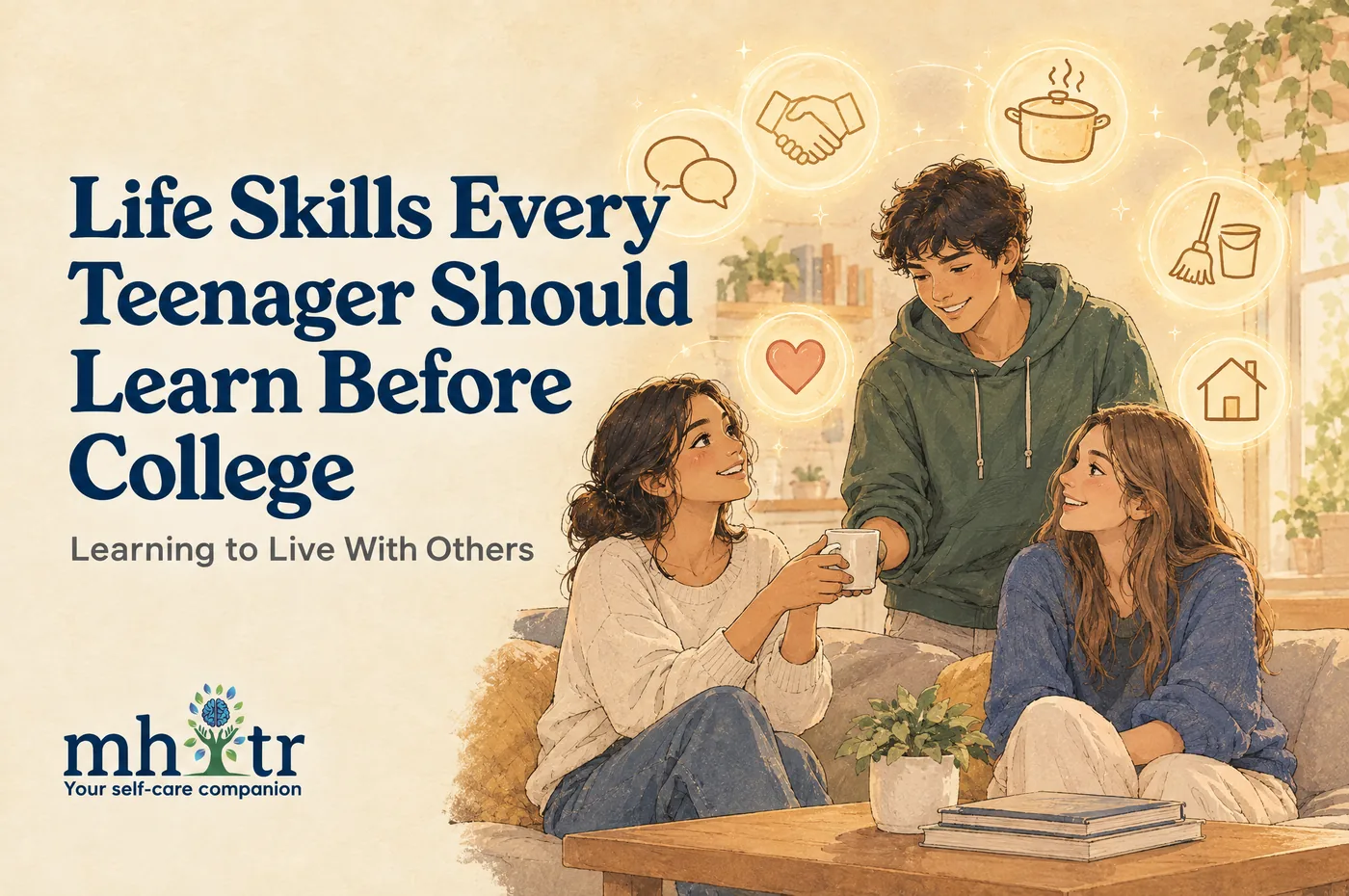
Preparing to live with other people
Independence gets presented, often, as the ability to do everything yourself. Adult life actually asks for a different kind of independence — one that involves knowing when to act alone and when cooperation is necessary.
A university student may need to work with classmates they didn’t choose. A future employee will have to communicate with colleagues who think differently. Friendships will change. Families will disagree. Relationships will require boundaries, patience and compromise. Knowing how to manage those situations isn’t an optional extra.
Communication, listening, teamwork, empathy, social skills and conflict resolution can’t guarantee every relationship works out. What they offer instead is something more realistic: the ability to enter relationships thoughtfully, handle disagreements constructively, and recognise that another person’s perspective exists even when it differs from your own.
That’s an important skill to carry into college. And it becomes even more important once the classroom gets much bigger. These skills have been tested and proven over generations before now. But perhaps we must ask how these skills work in the modern digital era.
References
- United Nations Children’s Fund. (2025). Guide: Adolescents and life skills education. UNICEF
- United Nations Children’s Fund. (2025). Guide: Ten key competencies for adolescents. UNICEF
- United Nations Children’s Fund India. (2019). Comprehensive life skills framework: Rights based and life cycle approach to building skills for empowerment. UNICEF India
- United Nations Children’s Fund India. (n.d.). Life skills. UNICEF India
- World Health Organization. (2019). School-based violence prevention: A practical handbook. WHO
- MHITR®. (n.d.). Igniting Minds: Socio-emotional learning program for students