With the coming of the digital age, the way we find recreation has changed considerably. Not so long ago, word puzzles arrived in newspapers, chessboards occupied living-room tables, and families gathered around cards or board games after dinner. Today, many of those activities are available on smartphones, tablets, and computers, often with bright colours, instant feedback, adjustable difficulty and software designed to keep you interested.
For older adults, this shift presents an interesting question. Are brain games for seniors online a good way to stay mentally engaged, or do traditional, physical games offer a better experience?
The answer depends on the individual, the activity, and what they hope to get from it. Digital games can offer convenience and variety, while physical games bring hands-on interaction and opportunities to connect with others. Both can be enjoyable ways to spend time. The important thing is to understand their differences, choose activities that suit the person, and keep expectations realistic.
Online brain games vs physical games at a glance
Neither format is better for everyone. Online brain games suit older adults who already enjoy a phone or tablet; physical games suit people who prefer hands-on play and shared time. The best choice is the one the person enjoys and keeps returning to.
Aspect | Online brain games | Physical games |
|---|---|---|
Getting started | Needs a device, an app and often an account | Open the box and play; nothing to charge |
Variety | Large libraries with adjustable difficulty | Limited to the games at hand |
Playing together | Multiplayer from different locations | Easy to share at the same table |
Accessibility | Adjustable text size, audio and speed; small controls can be hard | Tangible pieces; small parts and print can be hard |
Evidence | No proof commercial apps improve everyday memory | Not automatically better for the brain |
What brain games can and can’t do
Brain games are activities that engage skills such as memory, attention, language, reasoning, and problem-solving. They range from crossword puzzles and Sudoku to matching games, sequencing tasks, strategy challenges, and digital exercises designed to practise particular cognitive skills. Many of the daily mental exercises for brain health fall into this group.
The National Institute on Aging (NIA) says cognitive training designed to improve specific skills appears to help older adults, and that staying engaged in meaningful activities may have cognitive benefits too. It is equally clear that the evidence for a lasting effect is not definitive. It also warns against claims that certain computer and online games will improve memory and thinking, because there isn’t yet enough evidence that commercial brain-training apps have the same impact as the structured training used in research.
In practice, a puzzle is worth doing because it is enjoyable and keeps someone engaged. A high score in one game doesn’t promise a sharper memory everywhere else, and no game should be sold as protection against dementia.
What do screens offer?
Online brain games have several practical advantages. They can be accessed anywhere with a network connection, offer a wide range of activities, and often allow users to choose the level of difficulty. Someone who enjoys word searches might try a vocabulary game, while a person who prefers numbers could explore arithmetic puzzles or digital Sudoku.
For older adults who are comfortable with technology, these games may make it easier to build a regular activity into the day. Some platforms provide reminders, progress tracking, or multiplayer features that let family members play together from different locations.
Screens can also make certain activities easier to adapt. Text size, audio instructions, and game speed may be adjustable, depending on the app. For someone who finds a physical puzzle difficult to handle, a touchscreen version might be more accessible.
However, the experience varies considerably between products. Some apps are simple and intuitive, while others rely on small controls, frequent notifications, advertisements, subscriptions, or complicated menus. A game marketed as brain training may also make stronger claims about cognitive improvement than the research supports.
So, brain games for seniors online suit people who already enjoy using a phone or tablet. Before downloading anything, play it yourself for a few minutes. Check how easy it would be for your parent to start, stop and find their way back.
What physical games offer
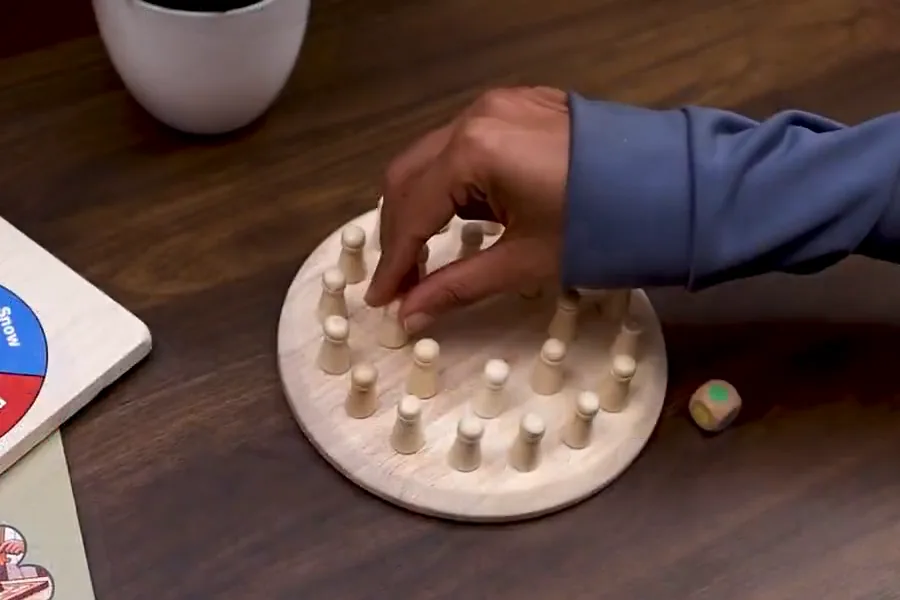
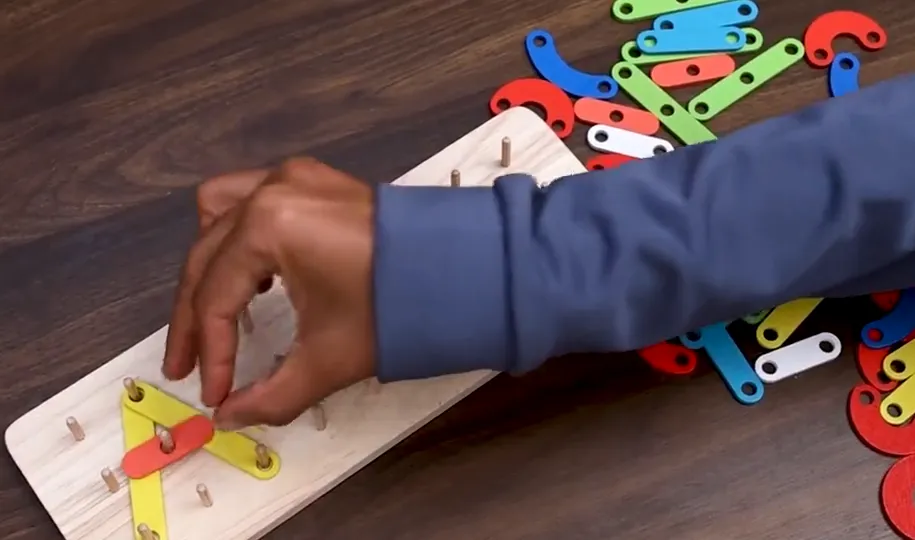
Physical games bring a different set of experiences to the table. Instead of tapping a screen, players handle cards, arrange pieces, move blocks, write answers, or work through a puzzle with tangible materials.
Depending on the activity, these movements may involve visual attention, coordination, planning, and fine motor skills alongside the mental challenge. Physical games can also be easier to share spontaneously. A relative can sit beside a parent, explain a rule, offer a hint, or join the next round without everyone needing a device or an account.
There is a social dimension here. A familiar game can become a reason for conversation, laughter, and shared time, particularly when relatives visit or several generations gather. The experience can matter as much as the puzzle itself.
Physical games also avoid some of the barriers associated with digital devices. There is no need to charge a tablet, navigate an unfamiliar interface, or remember a password. For someone who prefers hands-on activities, this simplicity can make it easier to get started.
Still, physical games are not automatically better for the brain. A poorly matched puzzle can be frustrating, and a familiar game may become repetitive. Some older adults may also find small pieces, printed instructions, or manual dexterity challenging.
The best activity is one that the person can access comfortably and wants to use. A physical format can be a strong choice, especially for people who enjoy tangible materials and shared play, but personal preference should guide the decision.
So, which is better?
Neither wins outright. A systematic review of video-game studies with older adults found limited effects on thinking skills. There were small gains in one memory skill, and results varied a great deal depending on the game and how the study was run. That fits the NIA’s message: look at the specific activity and the evidence behind it, rather than assuming every game does the same thing.
The more useful question is whether the activity suits the person’s interests, eyesight, dexterity and routine, and whether they will return to it.
A screen-free option: the Vayofit Wellness Kit
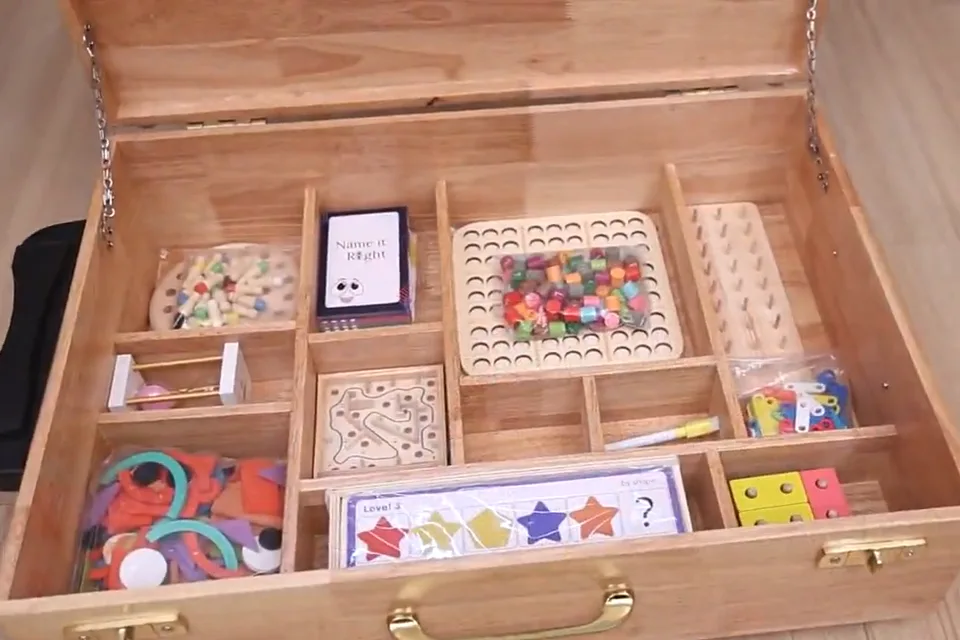
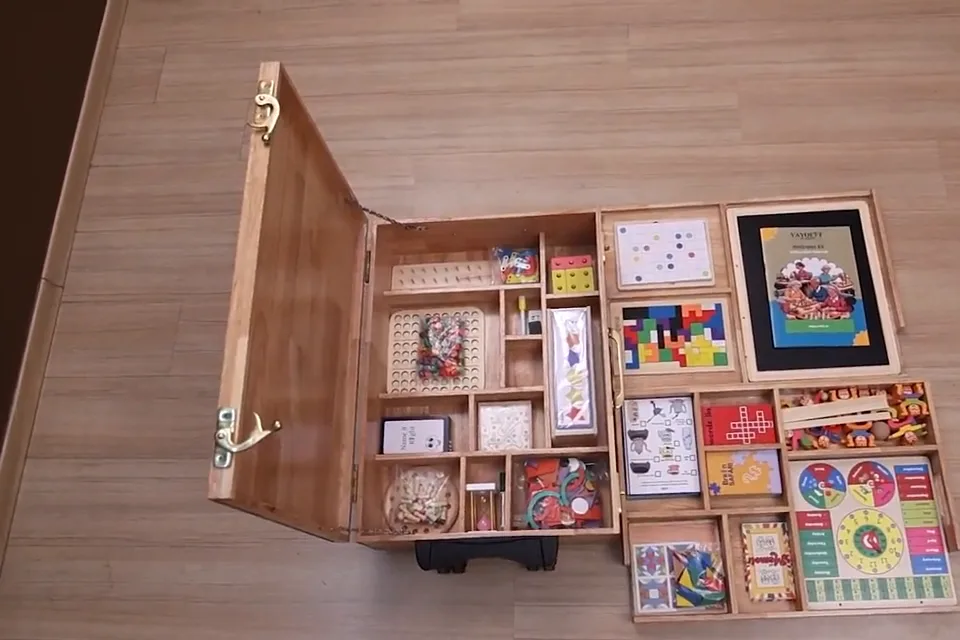
For families who would rather leave the screen out, MHITR® offers the Vayofit Wellness Kit, a screen-free cognitive activity kit for adults aged 55 and above.
The kit is arranged as a circuit of six stations: attention and orientation, memory and recall, language and verbal fluency, reasoning and logic, processing speed, and mindfulness. A full circuit takes around an hour, roughly ten minutes at each station. The stations can also be used one at a time for shorter sessions, at home or in a group. Because everything is physical, there is no app to install, account to create or device to charge.
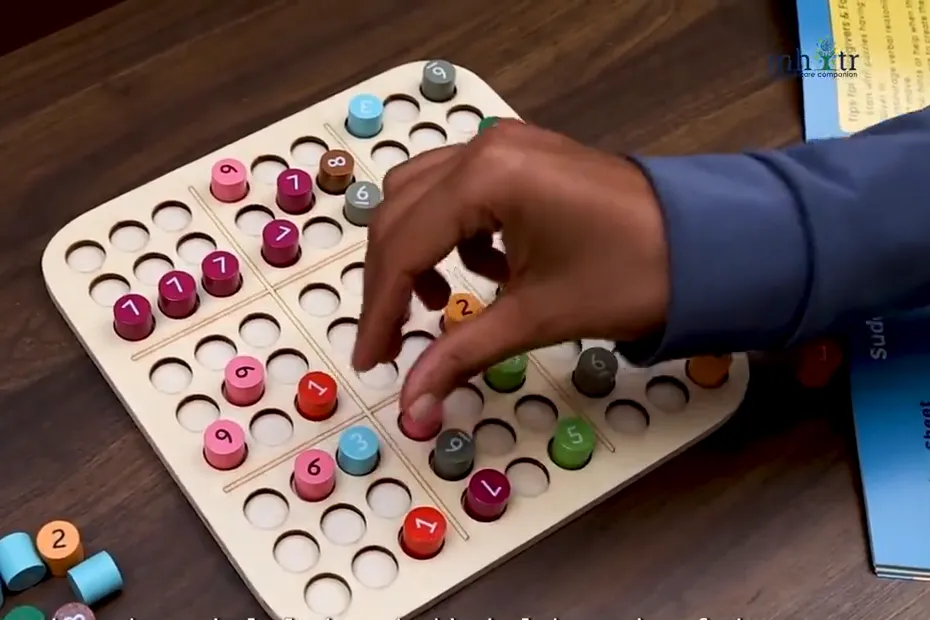
It suits company well. A son or daughter can take on a station during a visit, or grandchildren can join in for an afternoon. The kit is meant for wellness and engagement. It is not a medical or diagnostic device, and it shouldn’t be treated as a treatment for memory problems or a guarantee against cognitive decline.
You can see the activities and options on the official Vayofit Wellness Kit page.
Choosing the right game
Whether you’re looking at an app or a physical kit, these questions can help:
What do they already enjoy? Cards, wooden puzzles and word games are easier to take up than something unfamiliar.
Is the challenge comfortable? It should make them think without making every mistake feel like failure.
Is it accessible? Think about eyesight, hearing, hand strength and comfort with devices. For apps, look for clear controls and adjustable settings. For physical games, look for pieces that are easy to handle and print that is easy to read.
Is there variety? Word games, reasoning puzzles, hobbies and time with people keep a routine interesting.
Are scores the point? Enjoyment, curiosity and looking forward to the next session matter more.
Brain games are one part of healthy ageing, alongside social connection, movement, sleep and regular healthcare. If someone’s memory is noticeably getting worse, a doctor’s assessment should come first, not more games. Our guide to normal ageing versus early dementia explains which changes are worth raising.
Making room for play
Technology has expanded the ways older adults can access games and activities, but it has not made traditional play obsolete. Online brain games can offer convenience and variety, while physical games provide tangible interaction and an easy way to bring people together. Neither format guarantees better cognitive health, and neither needs to be dismissed.
For families choosing an activity for an older parent or grandparent, the most useful starting point is simple: consider what the person enjoys, what they can comfortably access, and what they are likely to return to.
For those who prefer screen-free activities, MHITR®’s Vayofit Wellness Kit offers one structured option, with games spanning several areas of mental engagement and mindfulness. For others, a well-chosen app, a crossword, a book, or a regular family game may be a better fit.
The goal is to make meaningful activities part of everyday life. Sometimes that means discovering a new digital game. Sometimes it means bringing a board and a few pieces to the table. And sometimes the most valuable part of the game is the person sitting across from you.
Frequently asked questions
Are online brain games good for seniors?
They can be an enjoyable way to stay mentally engaged, especially for older adults who are comfortable with a phone or tablet. The National Institute on Aging notes there is not yet enough evidence that commercial brain-training apps improve memory or thinking in everyday life, so choose them for enjoyment and engagement rather than as a treatment.
Are physical games better than brain apps for older adults?
Neither is better for everyone. A systematic review of video-game studies in older adults found limited and mixed effects on thinking skills. Physical games offer hands-on play and are easy to share with family; apps offer convenience and variety. The right choice depends on the person's interests, eyesight, dexterity and routine.
Can brain games prevent dementia?
No game has been shown to prevent dementia, and none should be sold as protection against it. Brain games are one part of healthy ageing alongside social connection, movement, sleep and regular healthcare. If memory is noticeably getting worse, see a doctor first.
How do I choose a brain game for an elderly parent?
Start with what they already enjoy, pick a challenge that makes them think without feeling like failure, and check it suits their eyesight, hearing, hand strength and comfort with devices. Variety helps, and enjoyment matters more than scores.
Is there a screen-free brain game kit for seniors?
MHITR®'s Vayofit Wellness Kit is a screen-free cognitive activity kit for adults aged 55 and above. It has six stations covering attention and orientation, memory, language, reasoning, processing speed and mindfulness, and a full circuit takes about an hour. It is a wellness product, not a medical or diagnostic device.