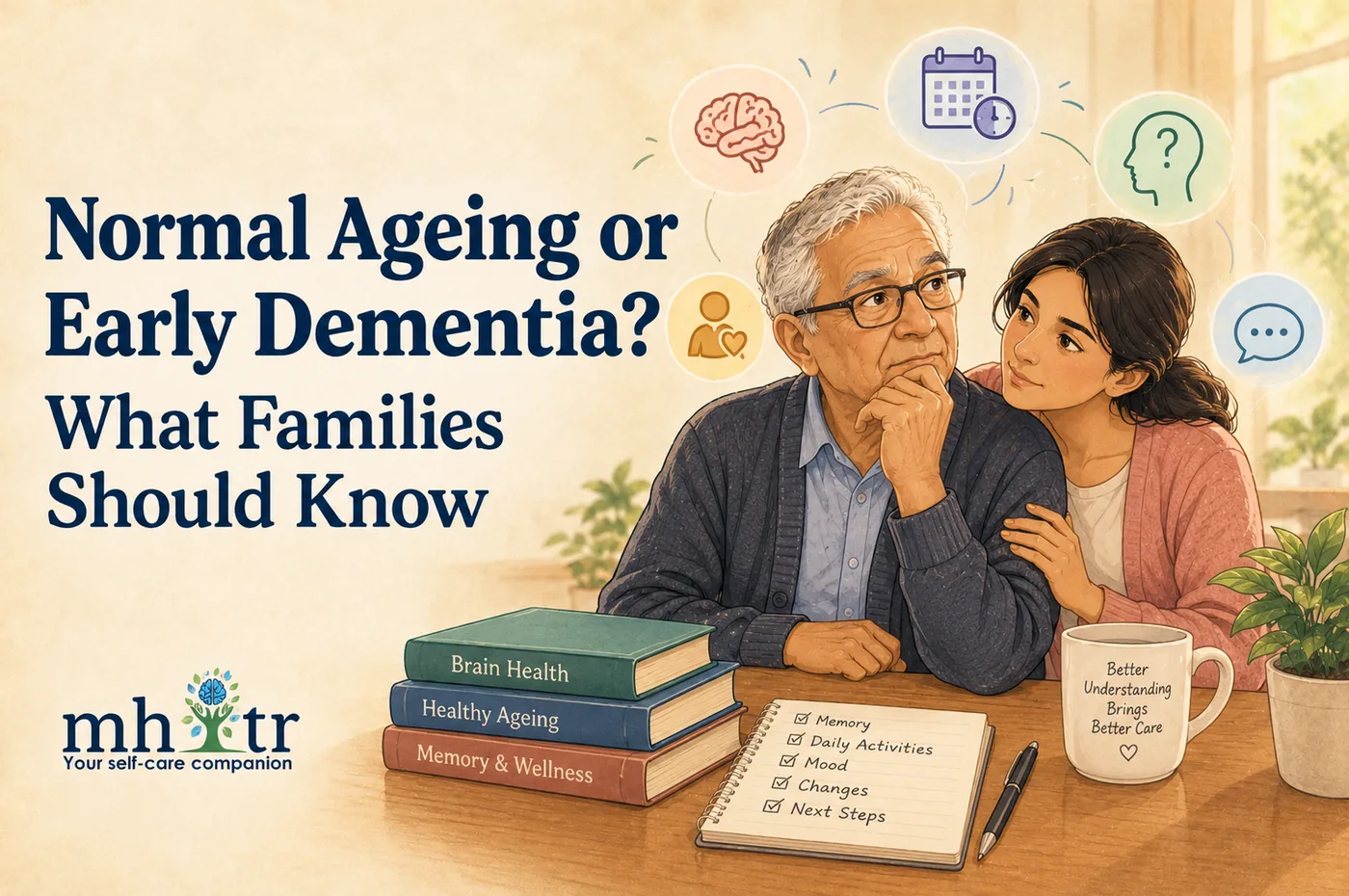
For many years, people have directly associated memory loss or senility with dementia. Because forgetting names or misplacing items is the most visible cognitive change people associate with ageing, memory loss became the public face of the condition. These moments of sudden memory loss can be unsettling, but occasional forgetfulness is a normal part of ageing.
Beyond simple memory loss, Alzheimer’s disease also brought about the misconception that memory loss means dementia. To understand this, it helps to look at the brain’s architecture. While people often assume normal age-related forgetfulness is just the early stage of Alzheimer’s, these two actually originate in different regions of the brain. They might be next-door neighbours, but they are entirely separate sub-regions performing different jobs.
Think of the brain’s memory centre as a complex library. Alzheimer’s disease typically attacks a gateway region called the entorhinal cortex first. You can think of this as the brain’s reception desk — the area where new information arrives and is directed into the memory system. When this reception desk is damaged by Alzheimer’s, new information simply cannot enter the building to be saved.
On the other hand, normal age-related forgetfulness is linked to changes in a neighbouring region called the dentate gyrus. This area acts as the brain’s memory sorter or cataloguer. Like a librarian, its job is to identify what is different about new information so that similar experiences don’t get mixed up. When this librarian naturally slows down with age, you might temporarily confuse where you parked your car today versus yesterday. However, the information is still getting into the building, and other hippocampal regions are still able to safely store, associate, and eventually retrieve it.
Because Alzheimer’s damages the reception desk (accounting for 60% to 80% of all dementia cases), this severe memory loss became the stereotype for all cognitive decline, leading to a cognitive shortcut where people assume all dementias look like Alzheimer’s.
Dementia involves changes in memory, thinking, communication or behaviour that interfere significantly with everyday life. It’s more common with increasing age, but dementia itself is not a normal part of ageing. Recognizing that the reality is more complex helps families and doctors catch non-memory symptoms early, like sudden personality shifts or spatial confusion, that might otherwise be ignored. This gives a person and their family more time to understand the condition and plan ahead.
Watch: Dr. Lalit Kumar on dementia and normal ageing
In this MHITR® conversation, Dr. Lalit Kumar talks through the early signs of dementia, how they differ from normal ageing, and what care and an active brain can do.
What can be normal as we age
Ageing can bring changes in how quickly we remember or process information. Someone may occasionally forget an appointment, misplace an object, briefly struggle to find a word, or forget what day it is and remember later.
These occasional lapses differ from a persistent decline that begins interfering with everyday activities. The National Institute on Aging draws a line here: an older person might occasionally make a poor decision or lose something, whereas repeated poor judgement, difficulty managing bills, or frequently losing possessions without being able to retrace their steps are more concerning patterns.
There’s also an important middle ground called mild cognitive impairment (MCI). A person with MCI has more memory or thinking difficulty than would normally be expected for their age, while still managing most everyday activities independently. MCI can sometimes precede dementia, but it doesn’t inevitably progress to dementia. Our guide to cognitive decline in the elderly looks at these early changes in more detail.
It is a common misconception that the brain only degrades. Research from the UCSF Memory and Aging Center shows that certain cognitive skills actually stay completely stable or even improve as we age:
- Crystallized intelligence: Your accumulated knowledge, general wisdom, and experience remain robust.
- Vocabulary and language: Older adults frequently possess a vastly larger vocabulary and a deeper understanding of word meanings than younger adults.
- Verbal reasoning: The ability to solve familiar problems using historical context and natural insight often sharpens.
Ultimately, the boundary line is independence. If a change is annoying but can be worked around with notes, routines, and a little extra time, it is likely normal ageing. If the change compromises a person’s safety or daily ability to live independently, it warrants a medical evaluation.
When forgetfulness should raise concern
The warning sign is usually a change in pattern and function, not one isolated incident. Families should pay attention when problems become frequent, progressively worse, or start interfering with activities the person previously managed independently. Some examples include, but are not limited to:
- Repeatedly asking the same questions.
- Becoming lost in familiar places.
- Regularly forgetting recent conversations or events.
- Struggling to follow a familiar recipe or set of instructions.
- Increasing difficulty handling money or paying bills.
- Confusion about dates, places or familiar people.
- Difficulty finding words or following conversations.
- Trouble completing familiar everyday tasks.
- Noticeable changes in judgement, personality or behaviour.
- Withdrawal from activities or social situations previously enjoyed.
These symptoms vary across different forms of dementia and won’t all appear in every person. Dementia can affect memory, attention, language, reasoning, visual-spatial ability, mood and behaviour differently depending on the type and the individual.
One useful question for families: is this person simply forgetting something occasionally, or are they losing the ability to manage something they previously knew how to do? That distinction is far more informative than counting how many times someone forgets their keys.
Before assuming dementia, look for other causes
This is one of the more important reasons not to diagnose dementia at home.
Memory and thinking problems have several possible causes. Medication side effects, depression or anxiety, sleep problems, thyroid disorders, vitamin deficiencies, alcohol misuse, infections and other medical conditions can all affect cognition — and some of these causes are treatable or reversible.
A sudden change deserves particular attention. Sudden confusion shouldn’t be attributed to ageing or dementia by default. Delirium can develop rapidly due to an underlying medical problem, including infection or medication-related causes, and requires prompt medical assessment.
This is where professional assessment matters. There’s no single test that establishes every dementia diagnosis. A clinician may take a detailed history, speak with someone who knows the person well, assess memory and other cognitive abilities, review medications and existing conditions, and arrange investigations to rule out other causes.
What a family should do when they notice changes
The first step is observation, not confrontation. If a parent has started missing appointments, repeating questions, or struggling with familiar tasks, keep a simple record of what’s changed: what happened, how often, and whether it’s affecting daily life. That gives a doctor something more useful to work with than a general statement like “their memory is getting bad.”
It’s also important to involve the older person in the conversation directly. Speak respectfully and privately. Avoid testing them repeatedly or turning meals and family gatherings into examinations. A simple approach: “I’ve noticed you’ve been having some difficulty keeping track of appointments lately. Would you be comfortable talking to your doctor about it with me?” The objective is to open the door to assessment without taking away the person’s dignity or independence.
Why early assessment creates more options
There’s a practical reason to act as soon as concerns appear. An early diagnosis can help identify potentially treatable contributors to cognitive problems, and when dementia is confirmed, it gives the person and family more time to understand what’s happening. It also creates an opportunity to discuss treatment, safety, finances and future care preferences while the person can still participate meaningfully in those decisions.
WHO describes diagnosis as an important first step toward accessing appropriate health and social care, and its current guidance emphasises person-centred care and maintaining autonomy and quality of life throughout.
To be clear about the limits here: there’s currently no universal cure for Alzheimer’s disease and related dementias, and an early diagnosis can’t stop the condition from progressing. What it can do is open access to treatments that help manage symptoms, and to care, planning and support that make a real difference in how a person and their family navigate the condition from that point forward.
Handling early-stage dementia: support without taking over
An early diagnosis changes the relationship between an older person and their family, and there’s often a temptation to start doing everything for them. Removing every responsibility immediately can also remove opportunities for independence that the person is still capable of using. In the early stages, many people continue participating fully in conversations, social activities and everyday decisions. The level of assistance should match actual need, not the diagnosis itself.
Practical support can include:
- Use memory aids. Calendars, written reminders, medication organisers and clearly organised routines make everyday tasks easier to manage.
- Keep communication simple and respectful. Give the person time to respond. Speak directly to them rather than automatically speaking through a family member or caregiver.
- Maintain familiar routines. Predictable routines reduce unnecessary confusion and make everyday activities easier to manage.
- Review safety gradually. Medication management, driving, cooking, finances and independent mobility may eventually require additional support. These decisions should be discussed based on the person’s actual circumstances, not applied automatically at the point of diagnosis.
- Plan early. Healthcare preferences, important documents, financial arrangements and future care plans are easier to discuss while the person can still clearly express their wishes.
A diagnosis changes some of the support a person needs; their history, preferences, relationships and ability to participate in decisions stay exactly the same.
Knowing the difference
Ageing brings occasional changes in memory. Dementia involves a more significant decline in cognitive abilities that interferes with everyday life. The real distinction isn’t whether an older person ever forgets something — it’s whether changes are becoming persistent, progressive and disruptive to familiar activities.
Families don’t need to work this out alone. When changes are noticeable, documenting them and arranging a medical assessment is a safer path than either dismissing everything as “old age” or assuming the worst. Some causes are treatable. When dementia is present, earlier recognition gives families more time to plan, adapt and support the person’s independence — for as long as that independence is genuinely possible.
Perhaps the worst part of being a family with an elderly member is the constant fear that they might not just be forgetful, but rather are in a very difficult part of their life. And knowing the difference is how we learn to maintain normalcy whilst actively caring for our senior citizens.
For everyday ways to keep the mind engaged, see our guides to daily mental exercises for brain health and brain-supporting foods for seniors, or browse all our healthy ageing resources. MHITR®’s Vayofit program brings physiotherapy, brain games and yoga together for seniors 55+.
References
- National Institute on Aging. (2025). Memory Problems, Forgetfulness, and Aging: What’s Normal and What’s Not. NIA
- National Institute on Aging. (2024). Age-Related Forgetfulness or Signs of Dementia? NIA
- NHS. (2024). Symptoms of dementia. NHS
- NHS. (2024). How to get a dementia diagnosis. NHS
- National Institute on Aging. (n.d.). Steps to Take After a Dementia Diagnosis. NIA
- National Institute on Aging. (n.d.). Planning After a Dementia Diagnosis. NIA
- World Health Organization. (2026). Risk reduction of cognitive decline and dementia: WHO guidelines, second edition. WHO
- World Health Organization. (2025). Dementia. WHO
- Memory and Aging Center — UCSF. (n.d.). Healthy aging. University of California, San Francisco. UCSF