Ageing changes many things for a person. What doesn’t change is the need to stay active, engaged and connected.
For many families, supporting an older parent or relative becomes focused almost entirely on medical appointments, medicines and managing existing health conditions. Those things matter, but healthy ageing involves a wider picture. Physical ability, cognitive engagement, emotional wellbeing and social connection all influence how comfortably and independently a person can live as they grow older.
This is where a senior wellness program can become useful.
Rather than waiting for a noticeable decline before taking action, structured wellness programs can give older adults regular opportunities to move, think, interact and maintain healthy routines. The approach fits with the broader concept of healthy ageing promoted by the World Health Organization, which focuses on maintaining functional ability and supporting people to do the things that matter to them as they age.
What is a senior wellness program?
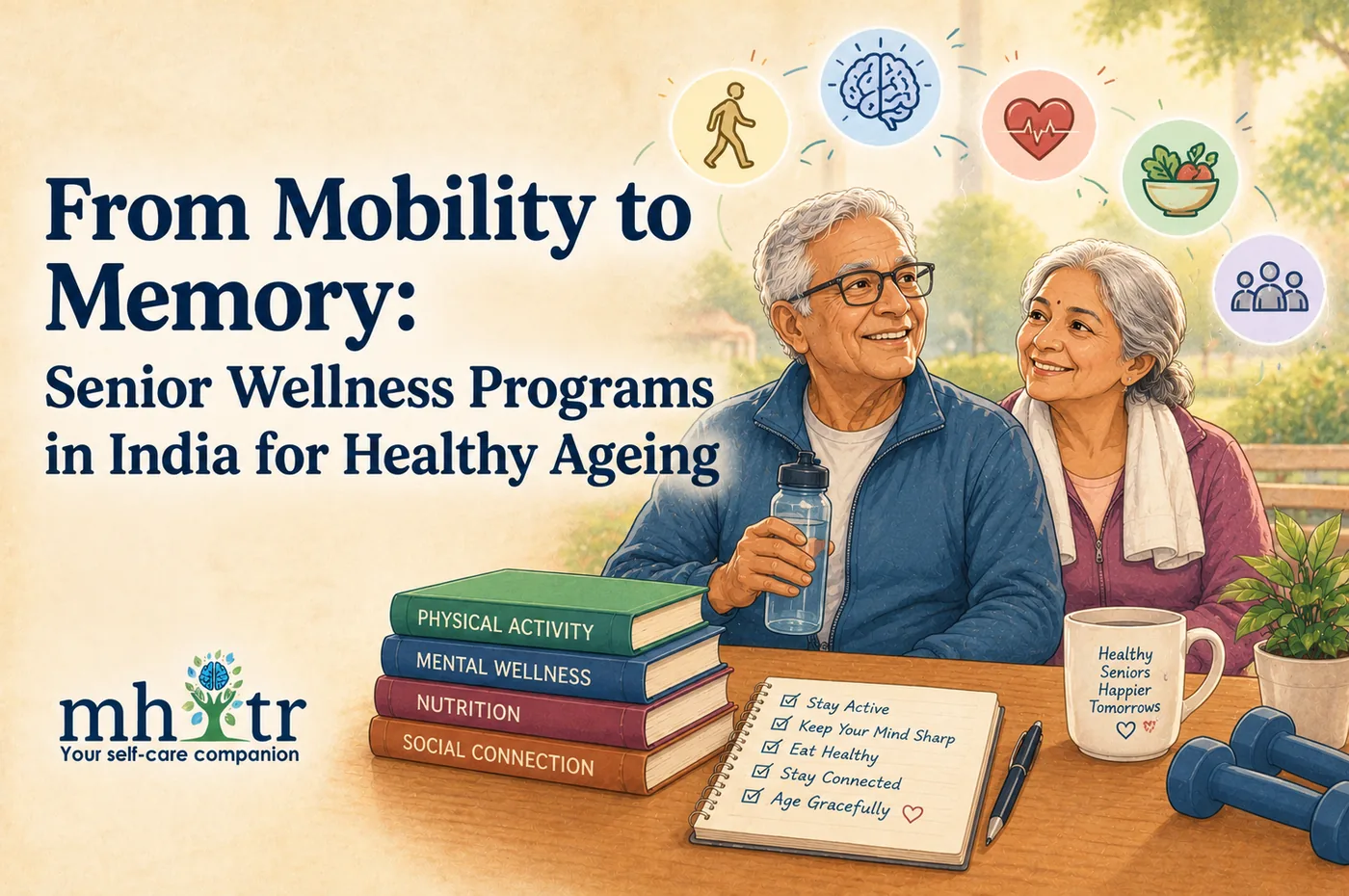
A senior wellness program is a structured set of activities designed around the changing physical, cognitive, emotional and social needs of older adults.
The exact format can vary considerably. Some programs focus mainly on fitness and mobility. Others may involve physiotherapy, yoga, balance training, cognitive activities, nutrition education, social activities or emotional wellbeing.
This distinction matters when families begin searching for senior wellness programs that suit them. A program labelled “senior wellness” may offer very different experiences depending on who leads it, what activities are included and whether it’s actually designed around the needs of older adults, rather than borrowed wholesale from general fitness. A useful program should be considered in terms of what it actually helps a person do.
Supporting mobility and physical function
Movement is one of the foundations of healthy ageing. For older adults, physical activity is comparatively more challenging than it would be for lower age groups. Regular physical activity is associated with better mental health outcomes, and in some studies, better cognitive function in older adults — though the size of that cognitive benefit is more modest than the mobility and mood benefits, which are better established. WHO recommendations also emphasise aerobic activity, muscle strengthening and activities that improve functional balance, particularly for older adults with reduced mobility.
A senior wellness program may include gentle strength and mobility exercises, balance and flexibility work, physiotherapy-guided movement, yoga or adapted exercise, and activities that support confidence with everyday movement.
The emphasis should be on appropriate activity rather than simply doing more exercise. Someone managing arthritis, reduced balance, chronic illness or another limitation may need a different level of activity from another person of the same age. WHO’s guidance recommends that older adults who cannot meet standard activity targets because of health conditions should remain as physically active as their abilities and circumstances allow.
Keeping the mind engaged
Healthy ageing also involves continuing to use cognitive abilities. Memory, attention, reasoning, language and problem-solving remain part of everyday life, whether someone is managing finances, remembering appointments, learning something new or simply participating in conversation.
This is one reason some senior wellness programs include cognitive activities or brain games. But cognitive stimulation should be presented realistically — a puzzle or memory exercise should not be treated as a guaranteed way to prevent dementia or reverse neurological disease. Its more practical role within a wellness routine is to provide structured mental engagement and variety.
For families, this can also create an opportunity to notice changes. If an older adult begins struggling significantly with everyday tasks, becoming unusually confused, or experiencing persistent changes in memory or behaviour, that deserves appropriate medical assessment rather than simply adding more brain games.
Supporting emotional wellbeing and social connection
Retirement, bereavement, changes in independence, relocation and reduced social contact can all alter an older person’s daily life. This is particularly relevant in India, where families may live across different cities or countries while older parents remain at home.
WHO identifies loneliness and social isolation as important risk factors for mental health conditions in later life, and estimates that around 11.8% of older adults experience loneliness globally. Its current guidance highlights social support, healthy behaviours and meaningful social activities — alongside interventions such as community and support groups, social skills activities and structured befriending — as part of promoting mental health among older adults.
This gives wellness programs another role beyond the physical. A regular class creates a reason to get up, prepare for an activity and interact with other people. That routine can matter, particularly when an older person’s previous social or professional environment has changed. A wellness class for seniors doesn’t need to be entirely about exercise. A few minutes of interaction, guided mindfulness or group activity can become part of a broader routine that supports engagement.
A wellness program cannot replace family relationships. It can, however, create another layer of regular human contact through a local community centre, an activity group, a senior fitness program, or an online class where participants see familiar faces several times a week.
Online or offline: which works better?
An offline program provides face-to-face interaction, access to physical facilities and direct supervision. It may suit someone who enjoys leaving home and participating in a local community.
An online program removes some of the barriers that make regular attendance difficult. An older adult can participate from home without arranging transport, navigating bad weather or travelling across a city. This can be particularly useful for families searching for senior fitness programs near them but finding that distance, mobility or scheduling makes regular attendance difficult.
The important question is therefore less about whether a program is online or offline and more about whether the format allows the older adult to participate safely and consistently.
What should families look for?
When comparing senior wellness programs, a few practical questions help.
- Who is the program designed for? Age alone doesn’t tell you what someone needs; look for programs that account for different levels of mobility and ability.
- Who leads the sessions? Check whether activities are guided by appropriately trained professionals and whether the program explains their roles.
- What does the program actually include? A fitness class, a physiotherapy program, a cognitive activity group and an integrated wellness program may all fall under the broad “wellness” category while serving quite different purposes.
- Can activities be adapted? Someone with limited mobility shouldn’t simply be expected to follow the same routine as everyone else.
- Is there consistency? A program someone attends once every few weeks has a very different practical value from one that fits comfortably into a regular routine.
- Does it encourage social interaction? For someone experiencing isolation, this may matter as much as the physical component.
- Does it know its limits? A wellness program should complement healthcare, not replace diagnosis, treatment or professional medical assessment when symptoms require it.
The same checklist applies when looking for a senior wellness boost program online. The label matters less than what’s actually being offered.
One example of this broader approach is Vayofit, MHITR®’s online healthy-ageing program for adults aged 55 and above across India.
Vayofit combines guided physiotherapy and yoga with cognitive activities, brain games, group interaction and mindfulness. Sessions are online and facilitator-led, allowing older adults to participate from anywhere at home, and are currently offered in English and Hindi with multiple time slots and alternate-day options.
According to MHITR®, each session runs 90 minutes, and the program is available throughout the year. The organisation also offers a free assessment for prospective participants or their families.
The broader idea behind Vayofit is worth noting because it reflects what an integrated senior wellness program can look like in practice: physical movement, cognitive engagement and social connection brought into the same routine rather than treated as separate concerns.
Choosing the right kind of support
The right program ultimately depends on what the older adult actually needs.
Someone becoming less active may benefit from structured movement and strength work. Someone spending most days alone may place greater value on recurring group interaction. Someone looking for more mental stimulation may prefer a program incorporating cognitive activities. Someone who finds travelling difficult may benefit from an online format. And when there are significant or new health concerns, the first step should always be appropriate healthcare assessment, not a wellness program in place of one.
India’s ageing population makes this broader approach increasingly relevant. The India Ageing Report 2023, published by UNFPA India and the International Institute for Population Sciences, examined the health, socioeconomic circumstances, healthcare access and support systems surrounding older adults in the country.
Healthy ageing is ultimately about maintaining the ability to participate in life as fully as possible. Mobility helps someone move through their day. Cognitive engagement keeps the mind active. Social connection gives routine another dimension. Emotional wellbeing helps make those years meaningful. A senior wellness program can’t control every part of ageing, but it can create a structure in which movement, mental engagement and human connection have a regular place.
And perhaps that proximity to normal is where healthy ageing begins.
References
- World Health Organization. Ageing and health. WHO
- World Health Organization. Mental health of older adults. WHO
- World Health Organization. Reducing social isolation and loneliness among older people. WHO
- World Health Organization. (2022). Physical activity and sedentary behaviour: A brief to support older people. WHO
- UNFPA India & International Institute for Population Sciences. (2023). Caring for Our Elders: Institutional Responses — India Ageing Report 2023. UNFPA India
- MHITR®. Vayofit Online Program