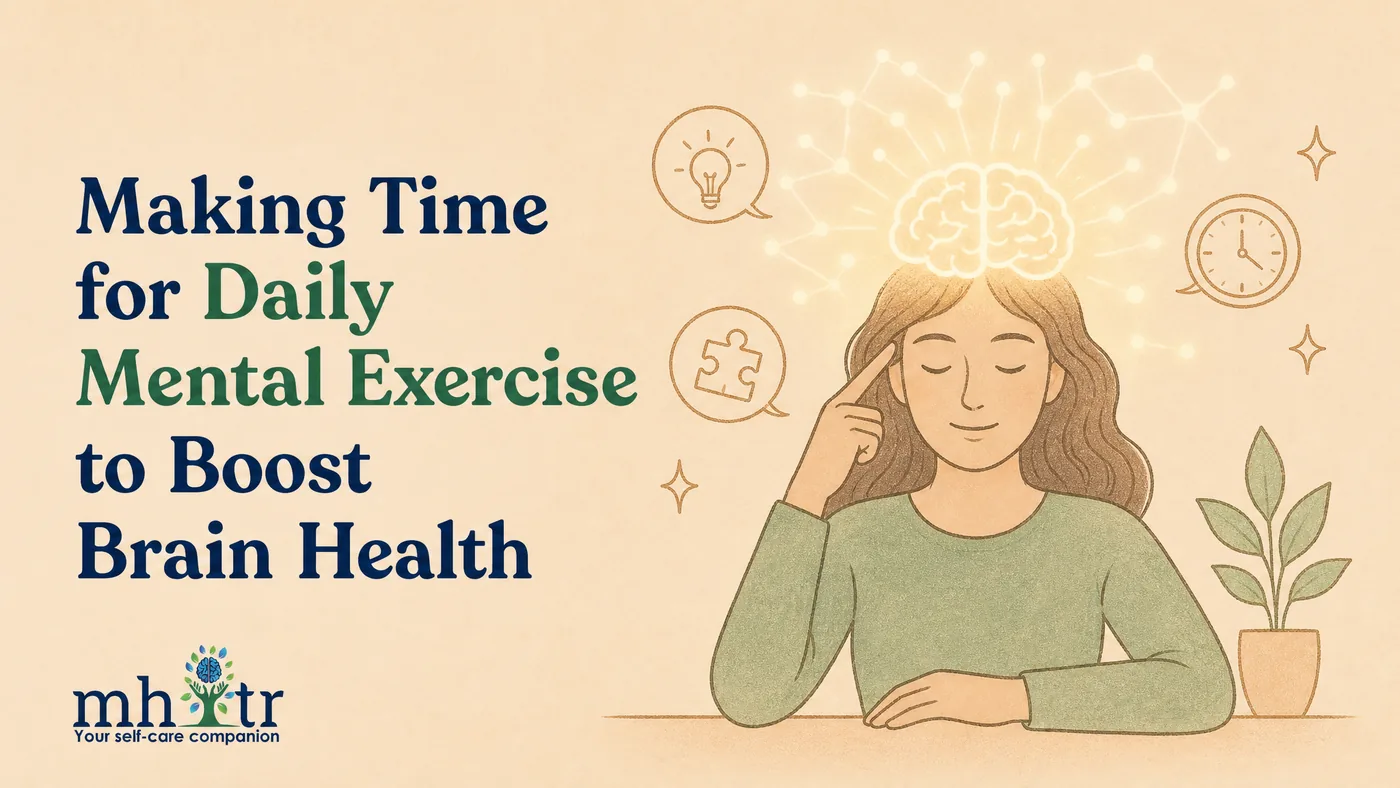
I believe that we should never go to bed without having done something productive. It is my way of making sure I remain efficient without sacrificing the normalcy of everyday life. The brain benefits from the same principle.
For older adults the idea is straightforward: give the mind regular opportunities to work — not rushed, not forced, but long enough to actually engage.
Ageing brings natural changes in memory, attention and processing speed. These changes do not automatically mean something is wrong. Keeping the brain active remains one of the practical ways to support healthy ageing. The question is how does this work?
Why mental exercise matters
The brain stays capable of adapting and responding to new information, even as cognitive abilities shift over time. That is why activities that ask someone to remember, reason, concentrate or learn something new become a useful addition to everyday life.
Research into cognitive training and mental stimulation for older adults has found encouraging results. Structured mental activity can support areas such as working memory, processing speed and broader cognitive function. Brain training is not an assured shield against dementia. A few minutes of puzzles can’t guarantee someone will avoid memory problems later in life. But there’s a reasonable case for keeping the brain active, and brain exercises to prevent memory loss are increasingly part of that broader conversation, even if no single exercise carries that guarantee on its own.
What counts as a brain workout?
The good news is that daily brain training doesn’t require expensive equipment nor does it depend on a specialist.
Mental exercise could involve recalling a list of objects, solving a few arithmetic problems, completing a crossword clue, learning a new word, doing a simple puzzle, or trying to remember details from something recently read. What matters is that the activity requires active thinking rather than simply consuming information.
Reading a newspaper is useful, but stopping afterwards to recall three things from the article adds another layer of cognitive engagement. Watching a television programme is passive; trying to remember the names of its characters or summarising the plot afterwards requires active recall instead.
Some of the best brain games for elderly adults are social ones. If you are short on senior citizen game ideas, start there: senior citizen brain games work best when someone else is playing too. Playing a board game, telling a story, or learning a new game can combine memory, attention, language and reasoning all at once.
The World Health Organization describes cognitive training as targeted, repetitive exercises intended to improve particular cognitive abilities, while cognitive stimulation covers broader activities such as reading, storytelling and games.
Some exercises you can try
Here are five simple activities that can fit into a daily routine.
- Memory recall. Look at a select group of everyday objects for some time. Put them away and try to recall all or some without looking. As it gets easier, increase the number of objects or add details like colour or position.
- Mental arithmetic. Do a few calculations without a calculator; start with 100 and repeatedly subtract seven, for instance. This is not training to be a math genius, but it’s helpful to make the brain hold information in mind while performing another operation.
- Word association. Choose a word and think of as many related words as possible. Starting with “garden” might lead to plants, soil, flowers, water, insects and vegetables. It’s a simple way to engage language and retrieval skills almost anywhere.
- Puzzles and games. Crosswords, Sudoku, matching games, chess and other puzzles for cognitive health are particularly useful when they require planning, memory or problem-solving rather than simply repeating something you are already good at. Give yourself a good, realistic challenge.
- Learn something new. Spend some time learning new facts, words, phrases or skills. The next day, try to recall what was learned before adding something new. This helps in turning that brief moment into a daily habit rather than a one-off.
What duration is the sweet spot?
Imagine sitting down for a puzzle or a memory task and being told the clock is almost up before you have properly started. The brain has barely begun to settle into the problem. For many older adults the result is a sense of failure rather than accomplishment. That feeling can make someone step back and decide they are “not good at this any more.”
The point of mental exercise is not to race the clock. It is to give the mind enough space to attempt the task, stay with it, and finish with a sense of having done something. The right amount of time is the amount that leaves the person stimulated rather than exhausted or defeated. For some that may be twenty minutes. For others it may be longer or shorter on a given day. What matters is that the session feels complete enough to be satisfying.
What the brain is actually doing
When we engage in a mental task, the brain works on more than one level at once.
There are the more immediate, front-end processes like taking in what we see and hear, noticing details, and making sense of the information in front of us. These are the parts that register the puzzle pieces, the list of words, or the story being told.
Then there are the deeper processes, such as holding information in mind (working memory), retrieving what we already know, and connecting new material to older knowledge. These take a little more time and effort.
A useful mental exercise gives both levels a chance to work. If the session is too short, only the surface processing gets activated. The person may feel they have “done something” without actually having stretched the systems that matter most for memory and thinking. Allowing enough time lets the activity move past the first glance and into real engagement.
Goals make the difference
Motivation is easier when there is a clear target. Think of how people stay committed to building a career or a business over years. The long-term goal keeps them moving even when the day-to-day work is hard. The same principle applies here, though on a smaller scale.
Setting a simple, achievable goal for a mental exercise changes the experience. Instead of “do a puzzle,” it becomes “finish this crossword section” or “learn and recall five new words” or “complete the memory game without looking back.” The sense of an approaching finish line is simply exhilarating. The brain’s reward system responds to that progress. Dopamine is released more readily when we feel we are getting closer to something we set out to do.
Keep in mind that the goal must be realistic. An impossible target creates the same discouragement as a rushed session. It is better to start small, succeed, and then gradually increase the challenge. Success builds the willingness to return the next day.
Mental exercise is only one part of the picture
Keeping the mind active sits alongside other elements of healthy ageing: physical movement, a balanced diet, managing conditions such as high blood pressure or diabetes, staying socially connected, and looking after hearing and vision. A person could do mental exercises every day while ignoring the rest of their health. That would miss the point by far. Mental activity works best as one consistent piece of a broader lifestyle, not as a substitute for everything else. Our Vayofit program is built around exactly that combination for adults 55+.
Making the habit stick
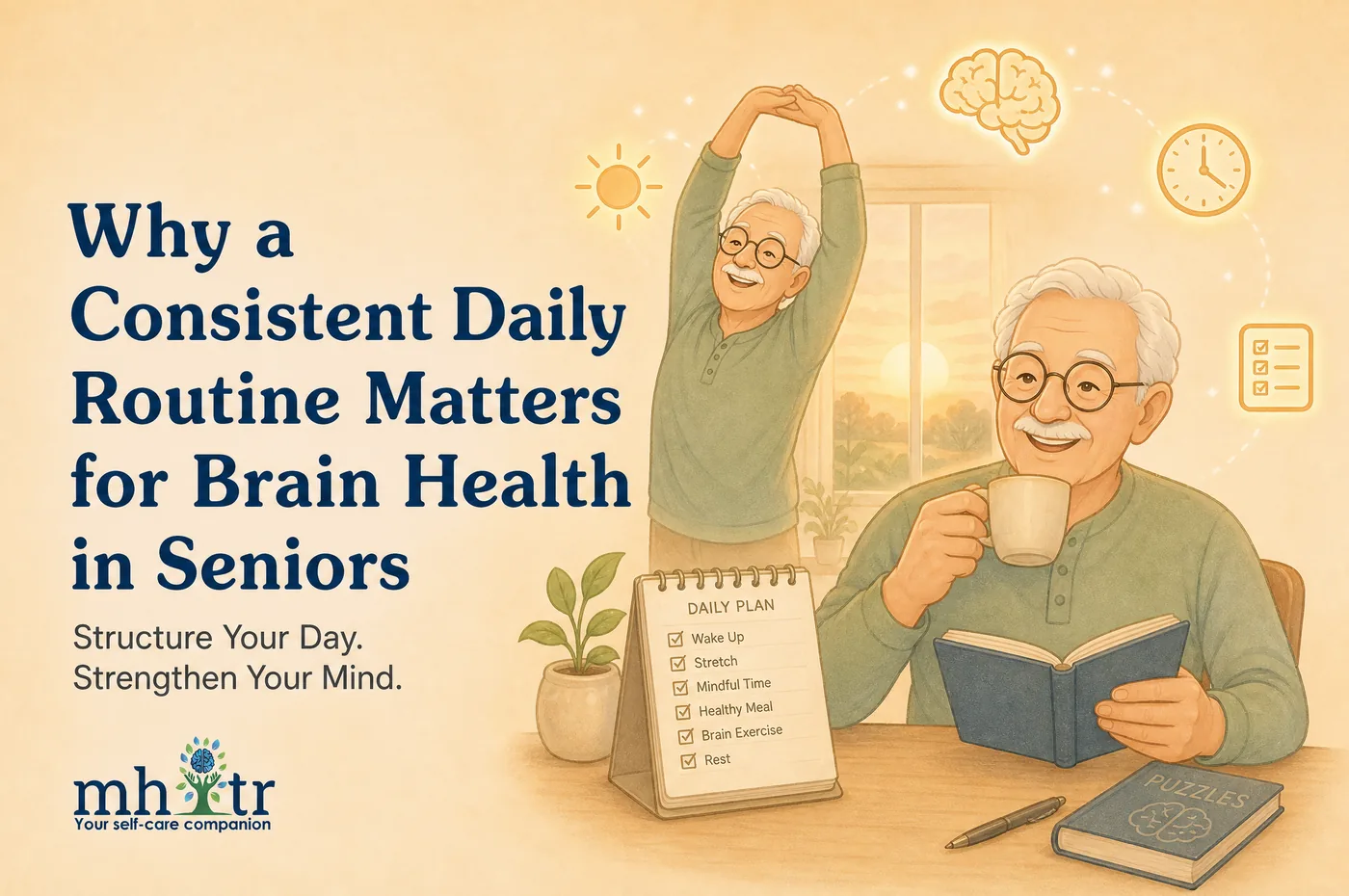
The easiest way to begin is to attach the activity to something that already happens regularly. Think of after breakfast, before the afternoon rest, or even in the early evening. And remember to change the type of exercise from day to day so it stays interesting. One day a memory task, another a word game, another a short learning challenge or a game with a family member.
There is no need to make every session harder than the last. Enjoyment and a sense of completion matter more than constant escalation. For seniors the aim is not to prove the brain can still solve difficult problems. It is simply to keep giving it regular opportunities to remember, reason, learn something new and engage.
Meaningful mental exercise does not transform brain health overnight. What it does is turn an abstract idea — “keep your brain active” — into something practical that can actually be done. And perhaps that’s the real value of these brain workouts: it turns healthy ageing from something we think we should do into something we actually do.
References
- Kelly, M. E., Loughrey, D., Lawlor, B. A., Robertson, I. H., Walsh, C., & Brennan, S. (2014). The impact of cognitive training and mental stimulation on cognitive and everyday functioning of healthy older adults: A systematic review and meta-analysis. Ageing Research Reviews, 15, 28–43. PubMed record
- Velloso, V., Latgé-Tovar, S., Bomilcar, I., & Mograbi, D. C. (2025). Cognitive interventions for healthy older adults: A systematic meta-review. International Journal of Clinical and Health Psychology, 25(1), 100538. PubMed record
- Olegário, R. L., Fernandes, S. R., & de Moraes, R. (2023). Efficacy of cognitive training on executive functions in healthy older adults: A systematic review with meta-analysis of randomized controlled trials. Psychology & Health, 40(5), 714–741. Journal record
- World Health Organization. (2026). Risk reduction of cognitive decline and dementia: WHO guidelines, second edition. WHO guidelines
- World Health Organization. (2026). New WHO guidelines: Up to 45% of dementia risk could be prevented or delayed. WHO news release