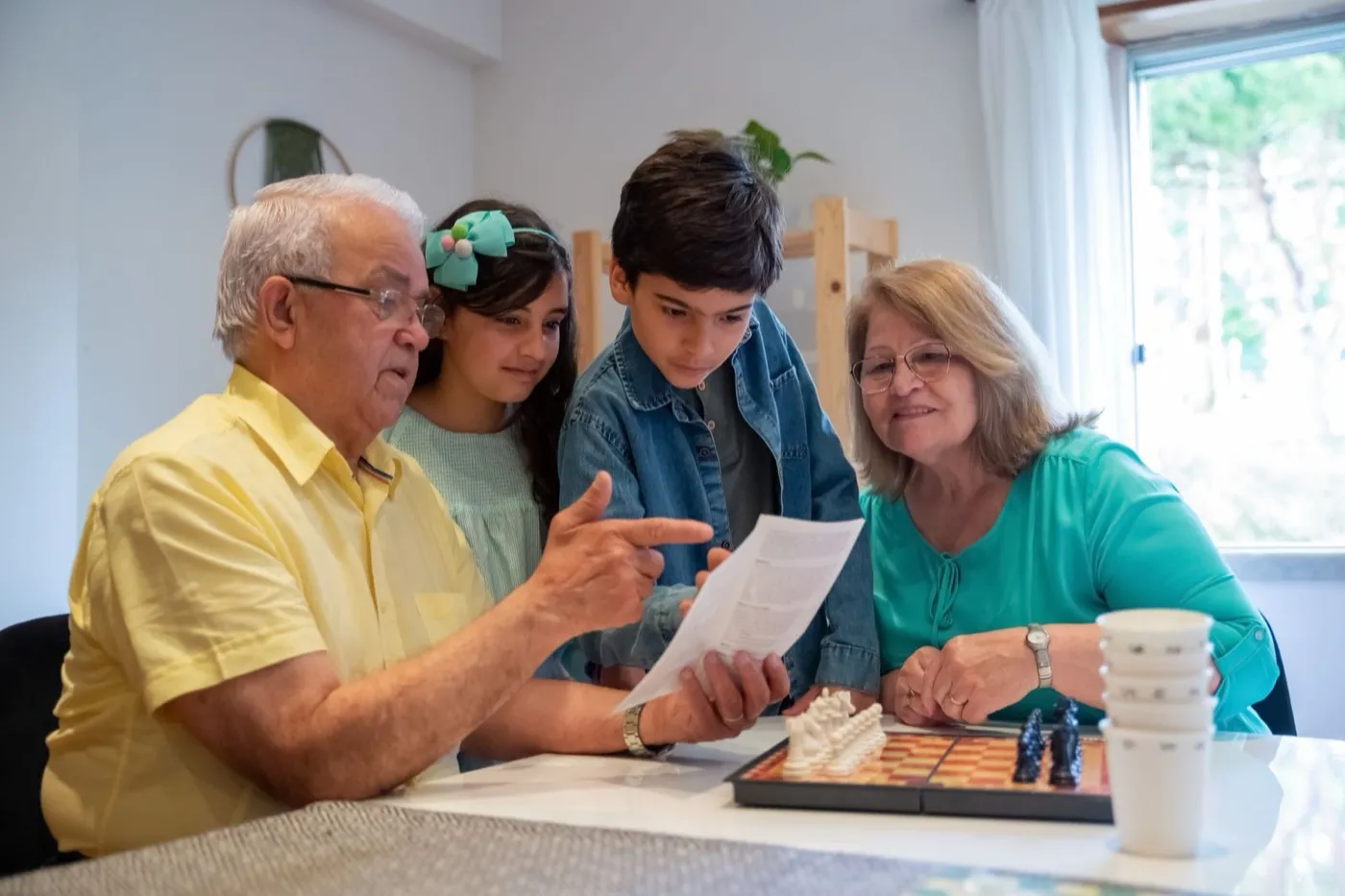
When an older adult is diagnosed with dementia, families often ask how to keep them mentally active. Should they continue with puzzles? Are memory games still useful? What happens when familiar activities start to become difficult?
These questions matter because dementia changes how a person processes information, communicates and manages everyday tasks. An activity that was once enjoyable can become frustrating if it no longer matches their abilities. (If you are still unsure what the diagnosis means, our guide to dementia and Alzheimer’s explains the types.)
The goal of brain games for elderly people with dementia is not to test memory or force performance. It is to encourage participation, preserve a sense of familiarity, support wellbeing and create opportunities for meaningful interaction.
The right activity depends on the person’s abilities, interests and current stage of dementia.
Do Brain Games Help People Living with Dementia?
Brain games can support engagement and quality of life in dementia, but they are not a cure. They sit within a broader approach called cognitive stimulation. This involves activities and conversations that encourage thinking, communication, memory, orientation and social interaction.
Cognitive Stimulation Therapy (CST) is a structured form of this approach. It uses themed group activities, discussion and mental exercises. Research supports its use particularly in mild to moderate dementia. NICE recommends offering group CST to people in these stages, and the World Health Organization advises that cognitive stimulation may be considered as part of non-pharmacological dementia care.
Indian research is also relevant. A study examining the cultural adaptation of CST in Chennai found that an adapted programme was acceptable and enjoyable to both participants and caregivers. The researchers emphasised that activities and delivery methods needed to reflect local language and cultural preferences.
Importantly, brain games cannot reverse the underlying disease or guarantee that cognitive decline will stop. Their value lies in supporting engagement, participation and quality of life.
Brain Games at Each Stage of Dementia
Dementia is progressive, but it does not affect everyone in the same way. The stages below are general guides, not fixed rules. A person may show abilities associated with different stages at the same time. Activities should always be based on the individual’s current needs and responses.
Stage | Focus | Examples |
|---|---|---|
Mild | Thinking and independence | Word association, large-print crosswords, picture matching, everyday sums, song lyrics, reminiscence |
Moderate | Simpler, shorter, more guided | Sorting objects, matching familiar pictures, large-piece puzzles, familiar music, folding towels |
Advanced | Comfort, familiarity and connection | Familiar music, safe sensory objects, family photographs, gentle hand activities, calm conversation |
Mild Dementia: Encourage Thinking and Independence
In the early stage, a person may still manage many everyday activities independently but experience difficulties with recent memory, word-finding, planning or more complicated tasks. (Some of these early changes overlap with mild cognitive impairment, which is not the same as dementia.)
Activities can remain relatively challenging if they are familiar and enjoyable. The aim is mental engagement without unnecessary pressure.
Activities to try:
- Word association (say “garden” and invite related words)
- Simple large-print crosswords with familiar vocabulary
- Picture matching with familiar objects or photographs
- Everyday calculations (simple shopping totals or counting household items)
- Music and lyrics (play familiar songs and invite the person to complete a line)
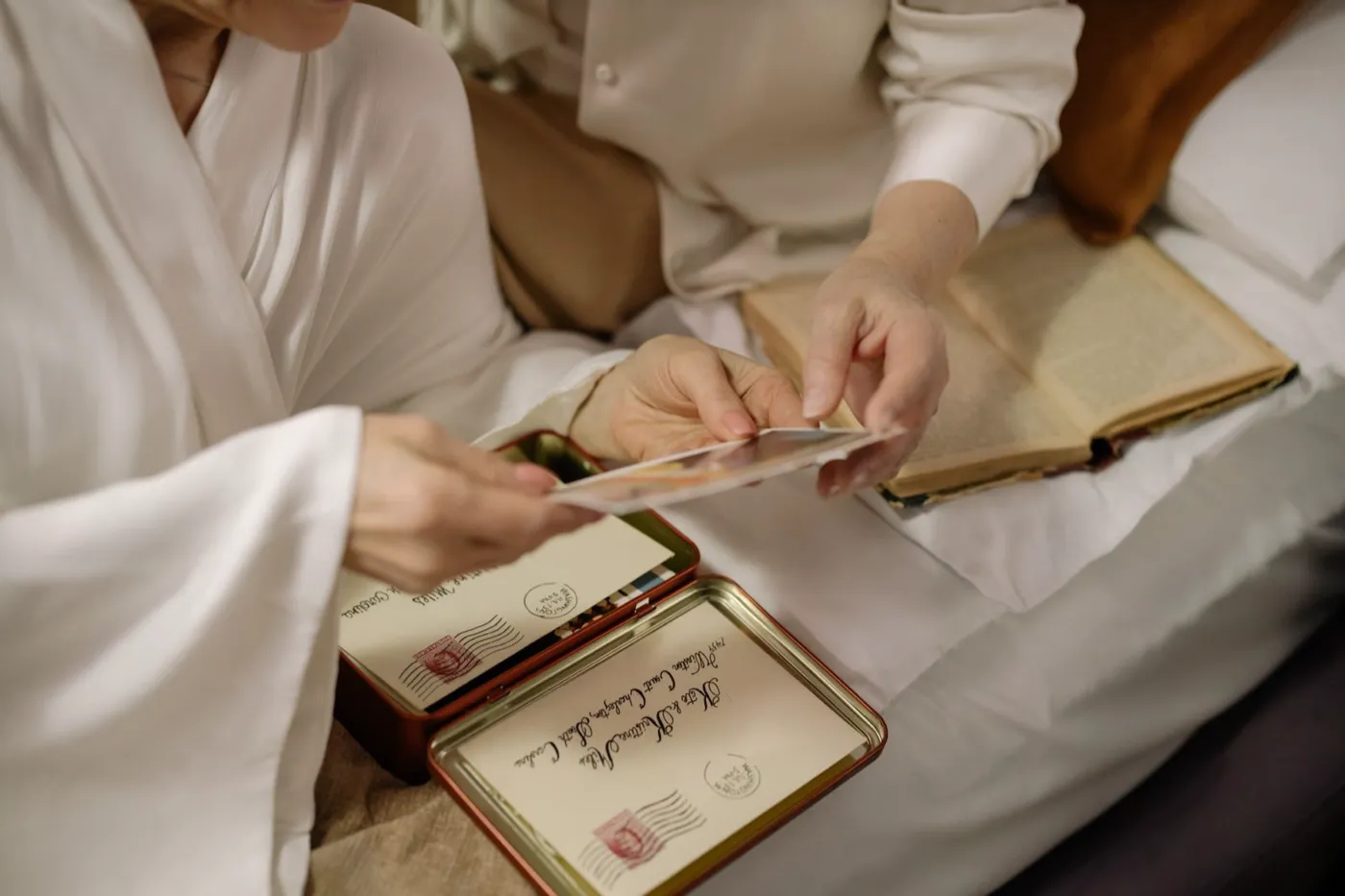
- Reminiscence conversations using photographs, albums or familiar objects
Group cognitive stimulation therapy may also be appropriate at this stage when delivered by trained facilitators. More ideas that suit this stage are in our list of 25 brain games for seniors.
Caregiver tip: Let the person attempt activities independently where possible. Offer hints rather than immediately supplying answers. The objective is participation, not a perfect score.
Moderate Dementia: Simplify and Provide More Guidance
As dementia progresses, memory and communication difficulties often become more noticeable. A person may struggle to follow complicated instructions, recognise certain objects or complete familiar tasks without assistance.
Activities should become shorter, simpler and more visual. Familiarity is particularly valuable.
Activities to try:
- Sorting objects (buttons, clothes, coloured blocks, vegetables)
- Matching familiar pictures of household items, animals or family members
- Simple puzzles with large pieces and clear images
- Familiar music from earlier years, with humming or gentle participation
- Folding towels or other guided household tasks
- Simple food preparation with supervision (washing vegetables, arranging ingredients)
- Picture conversations using familiar photographs
Avoid complicated rules, competitive games and activities that require remembering several instructions at once. Break tasks into small steps and demonstrate when needed.
Caregiver tip: If an activity becomes difficult, adapt it rather than insist on completion. Reduce the number of pieces or simplify the steps, as the NHS guidance on activities for dementia suggests.

Advanced Dementia: Prioritise Comfort, Familiarity and Connection
In advanced dementia, communication, recognition and independent functioning may be significantly affected. The person may have difficulty following verbal instructions or participating in conventional puzzles.
This does not mean meaningful engagement is no longer possible. The focus simply shifts from challenging cognitive skills to providing enjoyable sensory experiences, comfort and connection.
Activities to try:
- Familiar music played at a comfortable volume
- Safe sensory objects with different textures (soft fabric, smooth wood)
- Looking through family photographs without expecting identification
- Gentle hand activities (folding soft fabric, handling large objects)
- Familiar routines such as arranging flowers or folding clothes together
- Calm conversation about familiar people, places and everyday experiences
- A comfortable environment with soothing music and gentle interaction when welcomed
Do not insist that the person remember names, dates or events. If they do not recognise a photograph or cannot answer a question, move on without correcting or embarrassing them.
Caregiver tip: Pay attention to non-verbal responses: facial expression, eye contact, gestures and signs of comfort or distress. The WHO’s information for caregivers offers further guidance.

How to Make Activities More Effective
Regardless of stage, the way an activity is offered matters as much as the activity itself.
Practical principles that help:
- Start with the person’s interests. Someone who enjoyed gardening may respond better to flower sorting than to a number puzzle.
- Keep instructions simple. Give one step at a time and demonstrate when needed.
- Reduce distractions. Choose a quiet, familiar setting.
- Allow extra time. Do not rush.
- Adapt the difficulty. If an activity becomes frustrating, simplify it or change it.
- Focus on enjoyment. Praise participation and effort rather than correct answers.
- Keep sessions flexible. Stop when the person becomes tired, distressed or loses interest.
These principles reflect person-centred dementia care: activities should be adapted to the individual’s preferences, abilities and changing needs rather than following a rigid programme. For practical tips on choosing games with larger, easier-to-handle pieces, see our guide to board games and puzzles for seniors.
When Families Should Seek Professional Guidance
Brain games can complement dementia care, but they should not replace medical treatment or professional support.
A healthcare professional can assess cognitive and functional abilities, identify relevant health concerns and advise on suitable activities. Occupational therapists can help adapt everyday tasks; speech and language professionals can support communication difficulties where appropriate.
Sudden confusion, a rapid change in behaviour or an abrupt deterioration in functioning needs prompt medical attention. These changes may indicate delirium or another acute medical problem rather than the usual progression of dementia. Low mood and withdrawal can also look like memory problems; our guide to old age depression or dementia explains the differences.
Caregivers should also look after their own wellbeing. Supporting someone with dementia is demanding, and families should seek guidance, respite and practical help when needed. MHITR®’s psychotherapeutic services can support caregivers too.
Structured Screen-Free Options from MHITR®
For families looking for structured, screen-free activities, MHITR® offers the Vayofit Wellness Kit, designed for adults aged 55 and above.
The kit uses physical games and activity materials across areas such as memory and recall, orientation, arithmetic, language, reasoning and mindfulness. It can be used at home or in group settings, including clinics and senior living communities.
For someone living with dementia, the kit should not be treated as a standard brain-training prescription. Activities need to be selected and adapted according to the person’s abilities, comfort and clinical needs. A caregiver or trained facilitator can simplify instructions, reduce the number of pieces or provide assistance where appropriate.
For institutional settings, MHITR® also offers the VWK-Premium kit and Brain Olympics, a structured group event combining cognitive games, gentle movement and social participation for senior living communities. These are engagement and wellness offerings, not dementia treatments.
The Goal Is Connection, Not a Perfect Score
When choosing brain games for elderly people with dementia, it is easy to become preoccupied with what they can remember or how many activities they can complete. The more important question is whether the activity makes them feel comfortable, included and engaged.
A familiar song, a simple sorting activity or a conversation over old photographs may be more valuable than a complicated puzzle that causes frustration.
Dementia changes a person’s abilities, but it does not remove their need for enjoyment, dignity and human connection. With patience, thoughtful adaptation and appropriate support, families can continue creating meaningful moments throughout the journey.
Frequently asked questions
Do brain games help people with dementia?
They can support engagement, participation and quality of life, but they are not a cure and cannot reverse the disease. Cognitive Stimulation Therapy, a structured group form of brain activity, is recommended by NICE for mild to moderate dementia, and a Chennai study found a culturally adapted version acceptable to participants and caregivers.
What brain games suit mild dementia?
Familiar, enjoyable activities that still offer some challenge: word association, simple large-print crosswords, picture matching, everyday calculations, completing lines of familiar songs and reminiscence conversations with photographs. Offer hints rather than answers.
What activities work in moderate or advanced dementia?
In moderate dementia, keep activities short, simple and visual: sorting objects, matching familiar pictures, large-piece puzzles, familiar music and guided household tasks. In advanced dementia, focus on comfort and connection through familiar music, safe sensory objects, family photographs and calm conversation, without expecting the person to remember names or dates.
How do I stop a brain game frustrating someone with dementia?
Start with their interests, give one instruction at a time, reduce distractions, allow extra time and simplify the activity if it becomes difficult. Praise effort rather than correct answers, and stop when the person becomes tired, distressed or loses interest.
When should families seek medical help?
Sudden confusion, a rapid change in behaviour or an abrupt decline in functioning needs prompt medical attention, as it may signal delirium or another acute problem. A healthcare professional can also advise on suitable activities, and caregivers should seek support and respite for themselves.