What does holistic wellness mean?
Health is rarely one thing. Poor sleep affects mood, a stiff body limits social life, and long-term stress shows up as physical symptoms. Holistic wellness starts from that connection and supports several areas of life at once instead of treating each in isolation.
It is not an alternative to medical care. It sits alongside it, focusing on the everyday habits and support that keep people well.
Mental wellness
Clear thinking, focus and the ability to cope with pressure, supported by counselling or therapy when needed.
Physical wellness
Strength, mobility and energy through regular movement, yoga and physiotherapy suited to age and ability.
Emotional wellbeing
Recognising and managing feelings, building resilience and staying connected to other people.
Preventive wellness
Noticing early signs, screening where useful and acting before small problems become large ones.
Lifestyle support
Sleep, nutrition, routine and digital habits: the daily choices that shape long-term health.
Holistic wellness at different life stages
What the whole person needs changes with age, so a good program is built around a life stage rather than a single formula.
- Student wellness: teenagers and young adults need emotional regulation, confidence and healthy screen habits alongside academics. Igniting Minds is MHITR®'s mental wellness program for students, delivered on campus in schools and colleges.
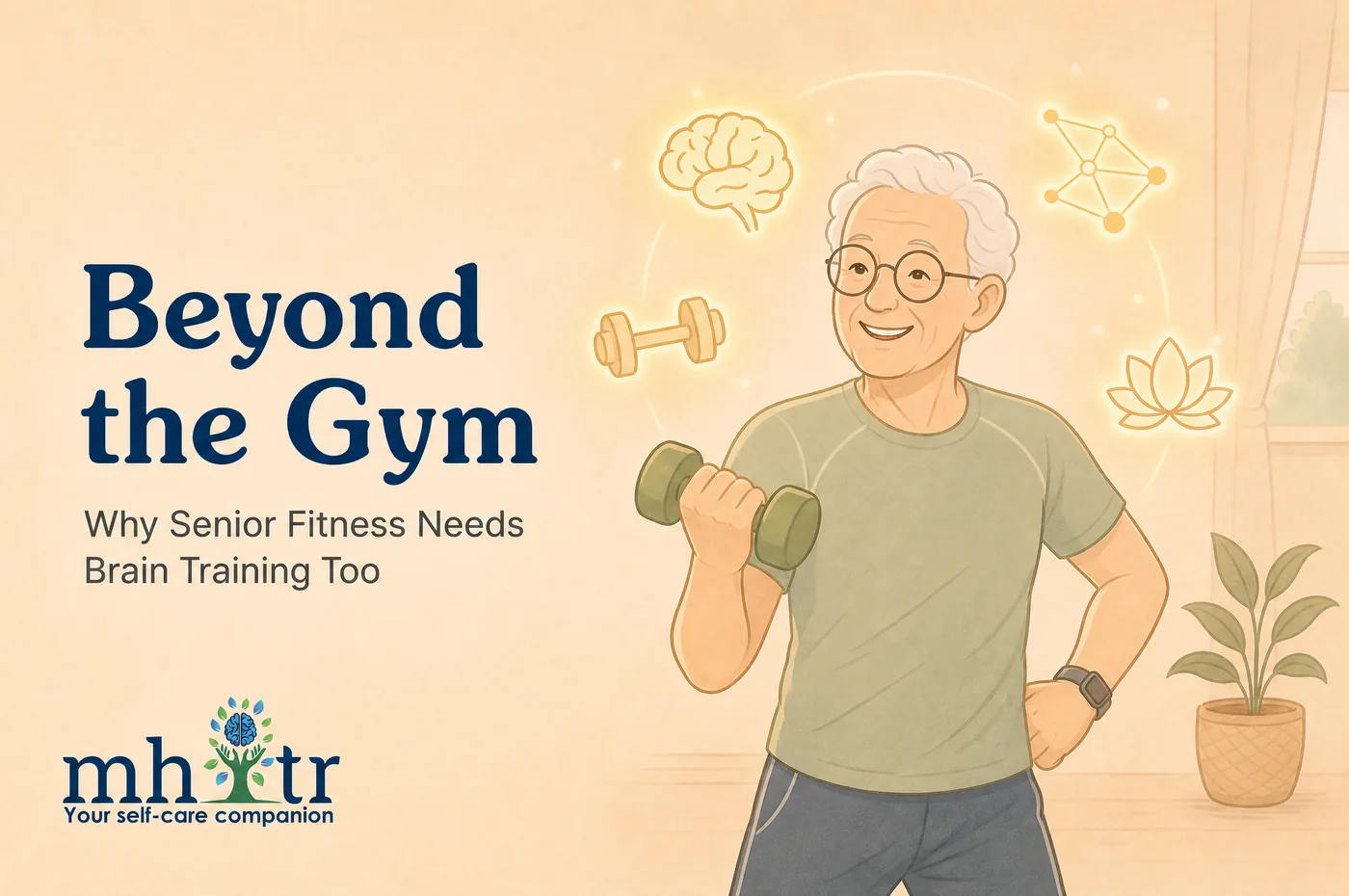
- Healthy ageing: older adults benefit from gentle movement, brain engagement and regular company. Vayofit is MHITR®'s online senior wellness program for adults aged 55 and over.
- Clinical support: when emotional difficulties need professional care, psychotherapeutic services provide assessment and therapy with licensed psychologists.
An integrated wellness approach
MHITR® brings yoga, psychology, physiotherapy and technology together so that the people supporting your mind and your body work to one plan. Programs are structured, led by qualified practitioners and delivered online, in person or in a hybrid format depending on the program.
The articles below look at how this works in practice, from proactive care pathways to the place of human therapists alongside technology.